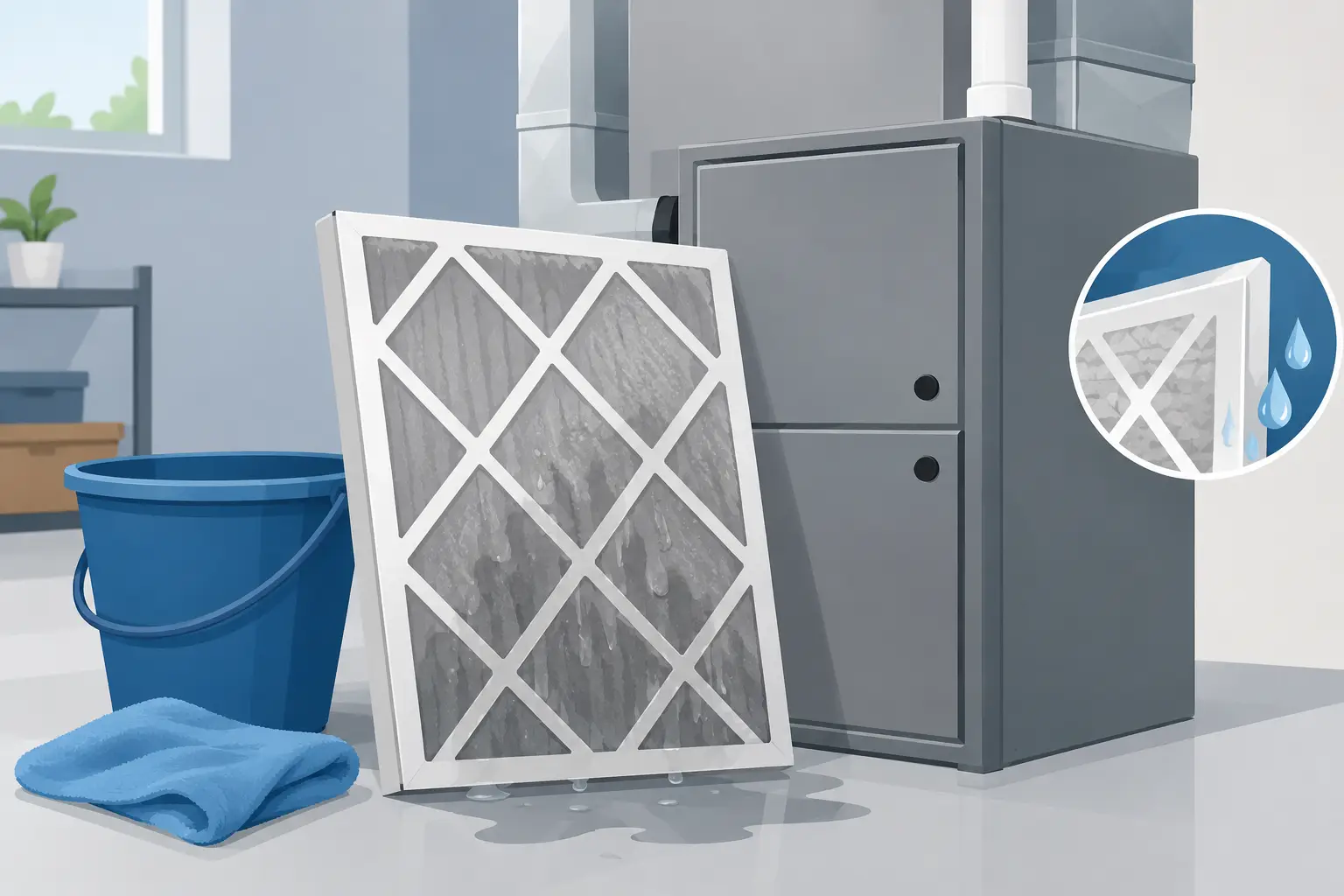
Finding a furnace filter wet with water is not a routine maintenance issue to ignore. A properly operating heating system should keep its air filter dry. When moisture reaches the filter, it can restrict airflow, encourage mold growth, damage the blower compartment, and point to a drainage or ductwork problem that needs attention.
For homeowners and property managers in Washougal, Vancouver, and throughout Clark County, the first step is simple: replace the wet filter, but do not assume the new one solves the problem. The source of the moisture matters. Some causes are minor and easy to correct, while others require an HVAC technician to prevent equipment damage or a loss of heat.
Is Your Furnace Filter Wet? Start With Safety
If water is actively dripping near the furnace, turn the system off at the thermostat. If water is close to electrical wiring, the blower motor, or the control board, shut off power to the equipment at the breaker if you can do so safely. Do not continue running the furnace in hopes that the airflow will dry the filter.
Remove the filter and look for clues. Is the whole filter wet, or only one corner? Is there standing water in or around the furnace cabinet? Does the water appear clean, rusty, or discolored? A damp filter with no obvious leak may point to condensation or humidifier issues, while pooled water usually indicates a blocked drain or a more direct leak.
Install a new filter only after the area is dry and the likely cause has been addressed. Running a system without a filter can pull dust into the blower, indoor coil, and ductwork. That can create a second problem, especially on equipment that is already dealing with moisture.
Common Reasons a Furnace Filter Gets Wet
A wet air filter does not always mean the furnace itself is leaking. Many forced-air systems share components with air conditioning, humidifiers, and heat pumps. Water can travel through the cabinet or nearby ductwork before reaching the filter rack.
A clogged condensate drain
High-efficiency gas furnaces produce condensate during normal heating operation. This water drains through tubing into a floor drain, condensate pump, or exterior discharge point. If the drain line is blocked by debris, algae, sediment, or ice, water can back up into the furnace cabinet.
This is one of the more common reasons for moisture around a condensing furnace. A backup may trigger a safety switch and shut the system down, but not every installation has the same protection. Drainage issues should be corrected promptly because standing water can affect internal components and may eventually lead to corrosion.
An air conditioner or heat pump drain problem
During cooling season, your air conditioner removes humidity from indoor air. That moisture collects on the indoor evaporator coil and flows into a condensate pan and drain line. If the line clogs, the pan cracks, or the coil freezes and then thaws, water can overflow into the furnace or air handler below it.
This can surprise homeowners because the filter may be located in the furnace even when the problem began with the AC or heat pump. In Southwest Washington, a system may shift between heating and cooling through the year, so the timing of the wet filter offers a useful clue.
A leaking whole-home humidifier
A furnace-mounted humidifier adds moisture to dry indoor air during winter. When its water panel, feed line, drain connection, or solenoid valve leaks, water can drip onto the filter housing or into the blower area.
Humidifiers need seasonal maintenance. An overfilled reservoir, mineral buildup, or a disconnected drain tube can all create a slow leak that is easy to miss until the filter feels damp or the furnace cabinet shows water staining.
Condensation on ducts or the filter rack
Cold metal ductwork can collect condensation when warm, humid air contacts it. This is more likely when ducts run through a crawlspace, attic, garage, or other unconditioned area with inadequate insulation. Poorly sealed duct connections can make the issue worse by allowing humid air to enter where it does not belong.
A little seasonal humidity does not normally soak a filter. If condensation is reaching the filter, the system may need duct sealing, insulation improvements, airflow adjustments, or a closer look at the home's moisture levels.
Water entering from outside or a nearby leak
In Clark County, heavy rain can expose problems around equipment installed in garages, crawlspaces, basements, or utility rooms. Water may enter through a foundation wall, roof penetration, exterior vent, or poorly sealed duct opening. A plumbing leak above or near the furnace can create the same symptoms.
Look beyond the HVAC equipment. Wet insulation, water stains, rust, or damp framing can help identify whether the water is coming from the building rather than the heating system.
Why a Wet Filter Can Affect Comfort and Equipment
A dry filter protects the system while allowing the blower to move air efficiently. Once it gets wet, the filter media can sag, collapse, or become loaded with dust much faster. Airflow drops, and reduced airflow can make rooms heat unevenly or cause the furnace to run longer than it should.
Moisture and trapped dust also create conditions where mildew can develop. That does not mean every wet filter has mold, but it is a reason not to leave it in place. The longer water sits inside an HVAC cabinet, the greater the chance of odors, corrosion, and damage to electrical parts.
For commercial properties, restricted airflow can be especially disruptive. A wet filter may contribute to comfort complaints from tenants, employees, or customers long before the equipment shuts down completely.
What You Can Check Before Calling for Service
After turning the equipment off, check the filter size and installation direction. Replace the wet filter with the correct size and make sure the airflow arrow points toward the furnace or air handler. A filter that fits loosely can allow unfiltered air to bypass it, but a poor fit alone does not cause water.
Next, inspect visible condensate tubing for loose connections, kinks, or obvious blockage. If a condensate pump is present, listen for unusual noise and check whether the reservoir is full. Do not force wire, compressed air, or harsh chemicals through drain lines inside the furnace cabinet. A damaged drain fitting or disconnected line can cause a larger leak.
You can also check the humidifier, if your system has one. Look for dripping water, a loose drain tube, or water collecting beneath the unit. If the humidifier is clearly leaking, turn off its water supply and arrange service.
Avoid increasing filter efficiency as a response to the issue. A higher MERV rating may improve particle capture, but it can also restrict airflow if the system is not designed for it. The right filter is dry, correctly sized, and matched to your equipment's airflow requirements.
When to Schedule HVAC Service
Call for professional heating and cooling service when the filter gets wet again after replacement, water is inside the furnace cabinet, the system will not heat, or you see water near electrical components. A technician can determine whether the issue is related to condensate drainage, a failed pump, a humidifier, duct condensation, an AC coil, or an outside water source.
A service visit is also the right choice if you notice a musty odor, repeated filter collapse, rust around the furnace, or a furnace that starts and stops frequently. Those signs can indicate that moisture or airflow problems have been present longer than expected.
If you smell natural gas, leave the area and contact your gas utility or emergency services from a safe location. A wet filter itself does not cause a gas leak, but any concern involving gas equipment deserves immediate caution.
Creekside HVAC provides reliable HVAC solutions for homeowners and local businesses across Washougal, Vancouver, and Clark County. A focused inspection can identify where the water is coming from and help protect the furnace, heat pump, or AC system that keeps your property comfortable.
A wet filter is often the first visible warning, not the whole problem. Replacing it protects your indoor air and equipment for the moment, but finding the moisture source is what keeps a small water issue from becoming an expensive repair.