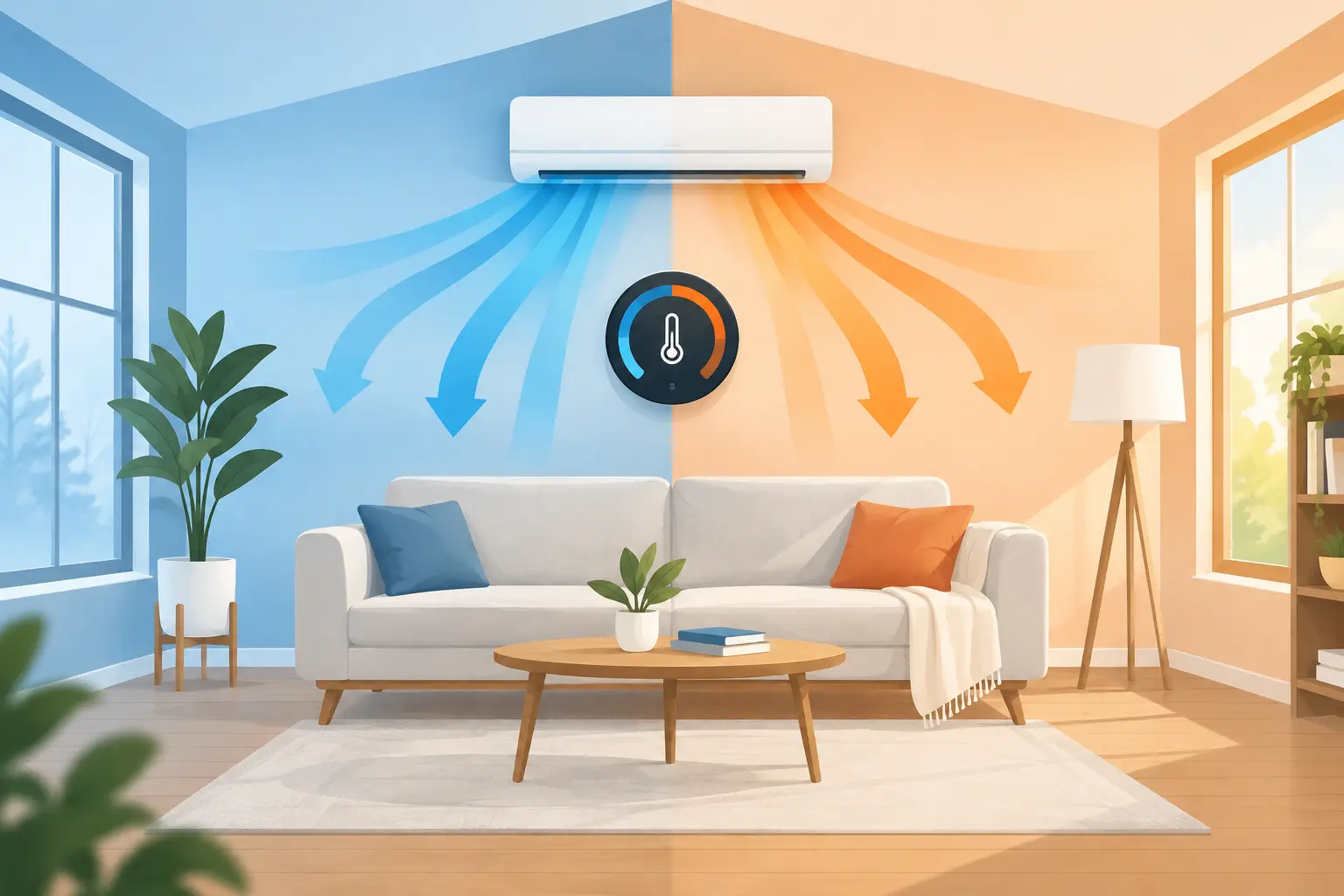
A bedroom that stays cold while the living room feels comfortable is more than a minor annoyance. It can make sleep difficult, drive up energy use, and lead homeowners to keep adjusting the thermostat without solving the underlying issue. Knowing how to improve uneven home temperatures starts with identifying whether the problem is caused by airflow, insulation, ductwork, equipment performance, or the layout of the home.
In Washougal, Vancouver, and throughout Clark County, temperature differences often become more noticeable during cold, damp winters and warm summer stretches. A reliable HVAC system should deliver consistent comfort, but the system can only perform as well as the airflow paths, controls, and home envelope around it.
Start With the Room, Not the Thermostat
Before changing thermostat settings, pay attention to where and when the temperature difference occurs. Is one upstairs room always warmer in summer? Is a room over the garage much colder in winter? Does the problem affect the entire second floor, or just one space at the end of a hallway?
These details help narrow down the cause. A single uncomfortable room may point to a closed damper, blocked supply vent, poor insulation, or an air leak around windows. Wider differences between floors often involve natural heat movement, inadequate return-air paths, duct design, or a system that is not properly balanced.
If the issue appeared suddenly, look for a recent change. A new piece of furniture may be blocking a return grille. A vent may have been closed, a filter may be clogged, or a heat pump or furnace may be developing a performance problem. Gradual changes are more likely connected to aging equipment, deteriorating ductwork, or changes in the home itself.
Improve Airflow Before Making Major Changes
Airflow is one of the most common reasons for uneven temperatures, and several checks are simple for a homeowner to make.
First, make sure all supply registers and return-air grilles are open and unobstructed. Supply registers deliver conditioned air into a room. Return grilles pull indoor air back to the HVAC system to be heated or cooled again. Both need clear space to work properly. Curtains, rugs, cabinets, and furniture can all reduce airflow.
Next, inspect the air filter. A dirty filter restricts airflow across the system and can leave distant rooms under-served. Check the filter monthly during heavy heating or cooling use and replace it according to the filter type and your household conditions. Homes with pets, construction dust, or frequent indoor activity may need more frequent changes.
Ceiling fans can also help, especially in two-story homes. In summer, a fan should push air downward to create a cooling breeze. In winter, reversing the fan at a low speed can gently circulate warm air that has collected near the ceiling. A fan will not correct an HVAC defect, but it can reduce small comfort differences in occupied rooms.
Avoid closing multiple vents to force air into another part of the house. This is a common tactic, but it can increase static pressure in the duct system and reduce overall performance. Some systems can tolerate limited adjustments, but widespread vent closure is not a dependable balancing method.
Check for Heat Loss and Solar Gain
Your HVAC equipment conditions the air, but the home’s insulation, windows, and exterior openings determine how long that conditioned air stays comfortable. A room with poor insulation may feel cold even when the furnace is running correctly. Likewise, west-facing rooms with large windows can overheat in the afternoon despite normal air-conditioning operation.
Rooms above garages, over crawlspaces, or near attic areas are especially vulnerable. Garage ceilings and exterior walls may have less insulation than the rest of the home. Attic bypasses, recessed lights, older windows, and gaps around exterior doors can also allow unwanted heat transfer.
Look for obvious drafts around windows and doors, then consider whether the uncomfortable room has different exposure than the rest of the house. Weatherstripping, caulking, insulated window coverings, and properly installed attic insulation can make a meaningful difference. These improvements also reduce the workload on your furnace, air conditioner, or heat pump.
It depends on the home, though. Sealing a small draft may help a mild comfort issue, while a room that is consistently 8 to 10 degrees different usually needs a closer look at airflow, ducts, or system capacity.
Use Thermostat Settings That Support Consistent Comfort
A centrally located thermostat measures conditions in one area, not every room. If it is near the kitchen, a sunny window, a fireplace, or an exterior door, it may not represent the average temperature of the home. This can cause the system to cycle off while bedrooms or upper floors still need heating or cooling.
For many homes, a programmable or smart thermostat can improve consistency by maintaining a regular schedule and reducing large temperature setbacks. However, a new thermostat is not a cure for poor airflow or an incorrectly sized system. It is a control device, not a replacement for proper HVAC design.
Remote temperature sensors can be helpful when a frequently used bedroom or office is consistently uncomfortable. They allow some compatible thermostats to prioritize conditions in a different area of the home at certain times of day. This is often a practical option when the temperature difference is moderate and the existing system is otherwise operating correctly.
When Ductwork Is the Problem
Ductwork is out of sight, but it has a direct effect on room-to-room comfort. Leaky ducts can lose heated or cooled air in attics, crawlspaces, garages, and wall cavities before it reaches the room. Disconnected ducts, crushed flex duct, undersized runs, and poorly placed registers can create persistent hot and cold spots.
Duct balancing may be needed when one part of the home receives too much airflow and another receives too little. An HVAC professional can measure airflow, inspect accessible ducts, and adjust dampers where appropriate. This is more precise than trying to balance the house by partially closing room vents.
Older homes and additions commonly have duct challenges. A remodeled room may be served by a duct run that was never designed for its current use. A finished attic, converted garage, or new home office can add heating and cooling demand without adding enough supply and return capacity.
In those cases, the right solution may range from duct repairs to a new duct run, zoning controls, or a ductless heat pump for the difficult area. The best option depends on the room’s size, insulation, use, and connection to the existing system.
Consider Equipment Performance and System Sizing
If temperature differences affect much of the house, the furnace, air conditioner, or heat pump may need professional evaluation. A system that is overdue for maintenance can lose airflow and capacity due to dirty coils, blower problems, refrigerant issues, worn components, or combustion-related concerns in a furnace.
System size also matters, but bigger is not always better. An oversized air conditioner may cool the thermostat area quickly and shut off before air circulates through the whole home. An undersized system may run continuously on the hottest or coldest days and still struggle to maintain even temperatures. Proper sizing requires more than matching the old unit’s capacity. A qualified contractor should consider square footage, insulation, windows, ductwork, occupancy, and local weather conditions.
For homes with a heat pump, performance can vary during colder weather depending on equipment condition, settings, and the supplemental heat source. If some rooms are cold while the system runs, a service visit can determine whether the issue is normal heat distribution or a mechanical concern that needs repair.
When to Call an HVAC Professional
Basic airflow and insulation checks are worthwhile, but some signs call for expert heating and cooling service. Schedule an evaluation if you notice a sudden change in comfort, weak airflow from multiple vents, unusual equipment noises, frequent cycling, rising utility costs, or temperature differences that persist after replacing the filter and opening vents.
A professional assessment can identify whether the issue involves the equipment, ducts, thermostat, insulation, or a combination of factors. That matters because the most visible symptom is not always the real cause. Replacing equipment when the duct system is leaking, for example, may leave the same rooms uncomfortable.
Creekside HVAC provides reliable HVAC solutions for homeowners and local businesses in Washougal, Vancouver, and Clark County. A focused diagnostic visit can help determine whether your home needs AC repair, furnace service, heat-pump support, duct adjustments, or a longer-term comfort upgrade.
Comfort should not depend on which room you happen to be in. When one area of your home never feels right, addressing the cause early can protect your equipment, reduce wasted energy, and make every season easier to live with.