A cooling system can run for years without needing refrigerant added. When it is low, the issue is usually not that the refrigerant was “used up.” It has escaped somewhere in the system. Understanding what causes AC refrigerant leaks can help homeowners and property managers act before a small repair turns into a compressor failure, a hot building, or an unexpected replacement decision.
For homes and small businesses in Washougal, Vancouver, and across Clark County, a refrigerant problem often first appears during the first warm stretch of the season. The AC may still blow some cool air, but it runs longer, struggles to reach the thermostat setting, or leaves certain rooms uncomfortable. Those are reasons to schedule a professional diagnostic visit rather than simply asking for a refrigerant recharge.
Why Refrigerant Loss Is a Repair Issue
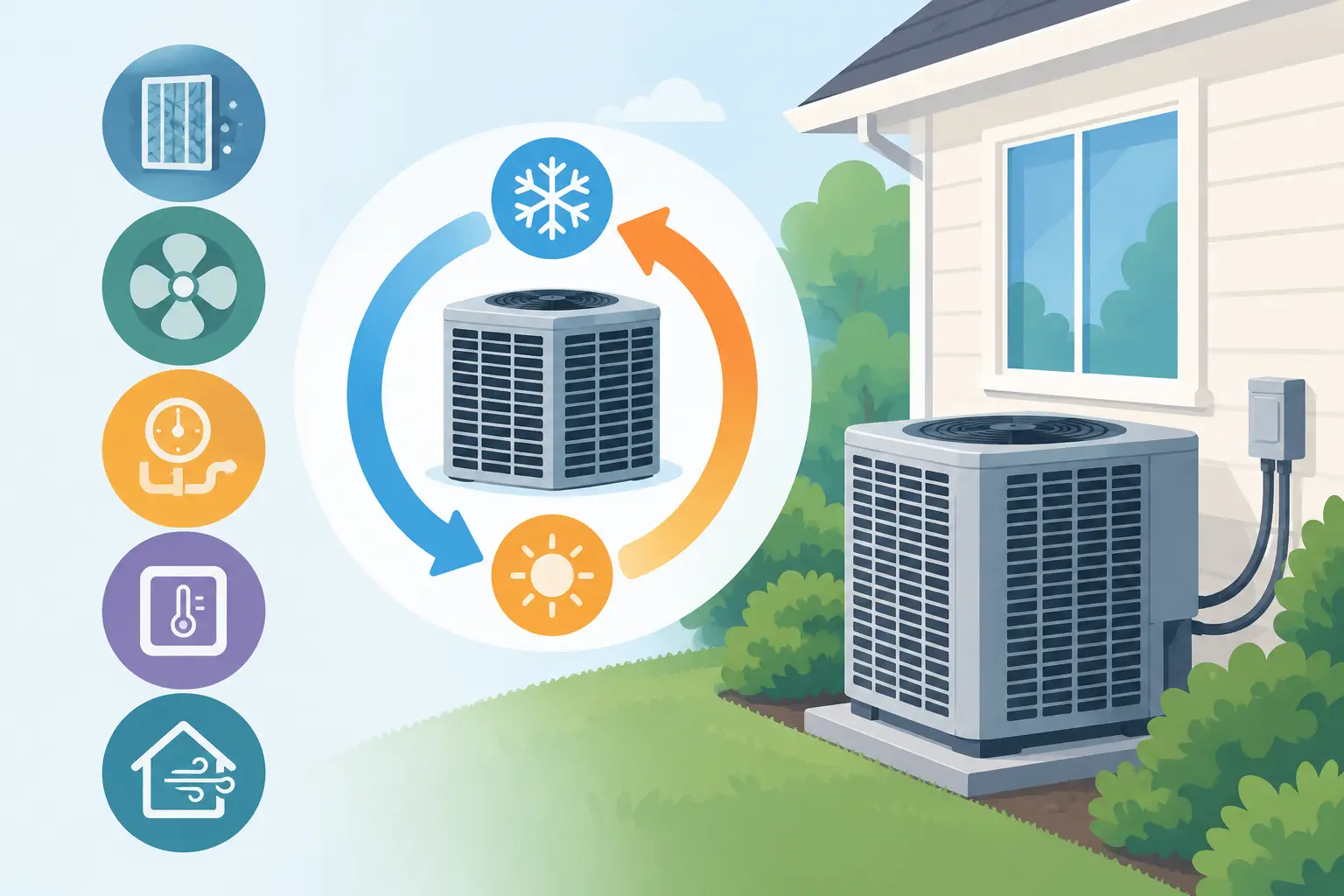
Refrigerant circulates in a sealed loop between the indoor coil, outdoor unit, and connecting refrigerant lines. It absorbs heat inside the building and releases that heat outdoors. Because the system is sealed, the refrigerant level should remain stable under normal operation.
A low charge means there is a leak, a damaged component, or a problem dating back to installation. Adding refrigerant without locating the source may restore cooling briefly, but it does not correct the failure. The same leak can continue, efficiency can decline again, and the system may be exposed to more serious damage.
Low refrigerant also puts added strain on the compressor, which is one of the most expensive parts of an air conditioner or heat pump to replace. Prompt AC repair gives a technician the chance to find the leak, assess the condition of the equipment, make the appropriate repair, and recharge the system to the manufacturer’s specifications.
What Causes AC Refrigerant Leaks?
Refrigerant leaks can develop in several places. The exact cause matters because a repair that makes sense on a relatively new system may not be the best investment for an aging unit with multiple failing components.
Corrosion on the Indoor Evaporator Coil
The evaporator coil sits inside the home, typically near the furnace or air handler. Over time, corrosion can create tiny holes in its copper or aluminum tubing. This is often called formicary corrosion when it is linked to chemical reactions involving common household airborne compounds.
The leak may be extremely small at first. Homeowners may notice gradually weaker cooling, longer run times, or ice developing on the refrigerant line. Coil replacement is sometimes the reliable repair, but the right choice depends on the system’s age, warranty status, refrigerant type, and overall condition.
Damaged or Worn Refrigerant Lines
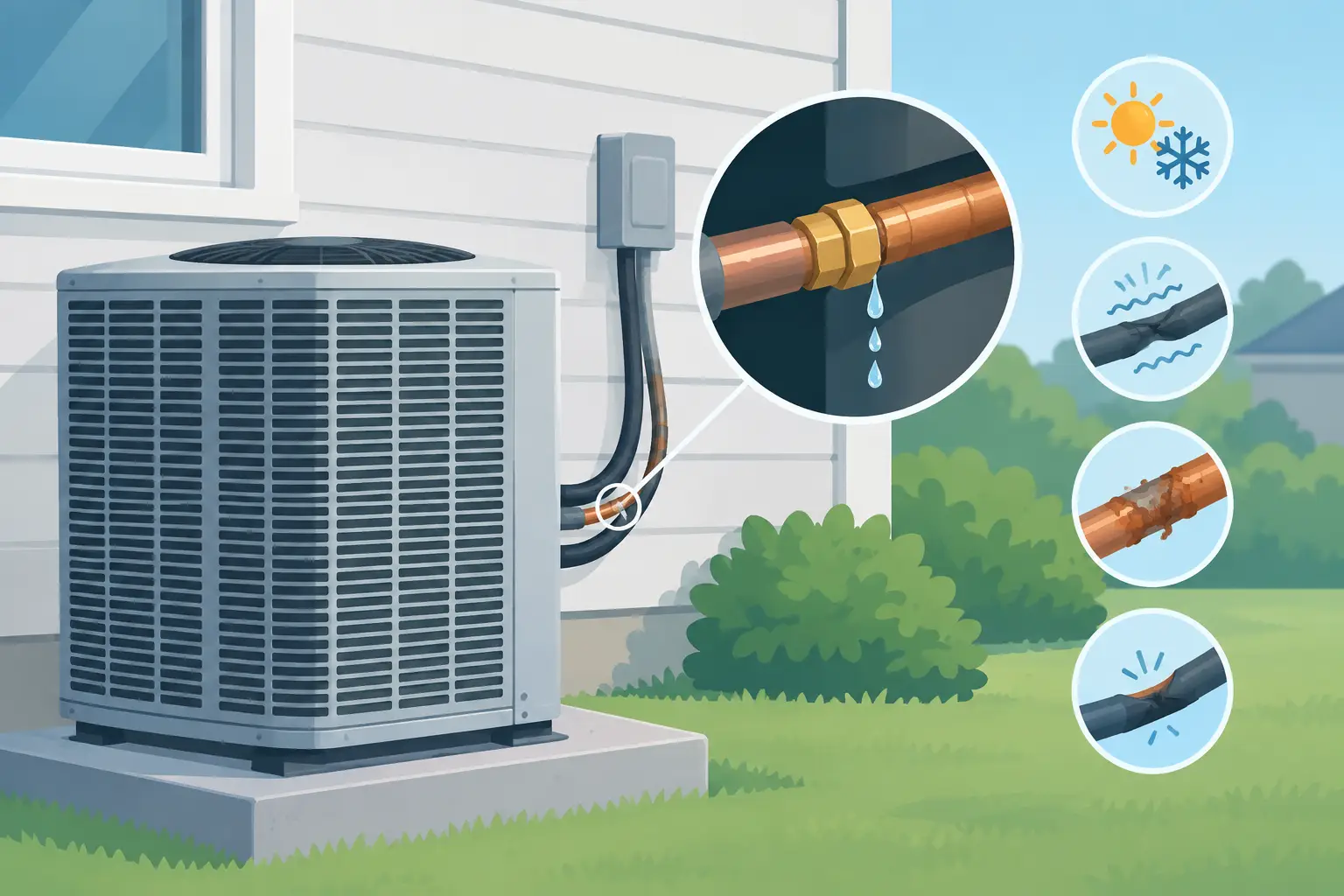
The insulated copper lines running between the indoor and outdoor equipment can be damaged by accidental impact, vibration, rubbing, pests, landscaping work, or weather exposure. Insulation that has deteriorated can also leave parts of the line more vulnerable to damage and reduced efficiency.
Vibration-related wear deserves attention. HVAC equipment naturally vibrates while operating, and poorly supported tubing can rub against another surface for years before a pinhole develops. A qualified technician looks beyond the visible leak and corrects the conditions that could cause the repair to fail again.
Loose Connections and Failing Service Valves
Refrigerant lines connect to equipment through fittings, brazed joints, and service ports. A connection that was not properly installed, sealed, or protected can leak slowly over time. Service valves on the outdoor unit can also develop leaks, particularly as seals age.
These issues are often more straightforward to repair than a leaking coil, but they still require proper testing. Refrigerant leaks are not always visible, and assuming a connection is the problem without confirming it can lead to incomplete repairs.
Installation Errors
An AC system can begin losing refrigerant soon after installation if line connections are not brazed correctly, the system was not pressure-tested thoroughly, or the refrigerant charge was not set properly. Poor line routing and inadequate support can create vibration wear later as well.
This does not mean every leak in a newer system is an installation issue. Manufacturing defects and unexpected damage can occur. Still, a system that becomes low on refrigerant early in its life should be evaluated carefully to identify the cause and determine whether warranty coverage may apply.
Physical Damage Around the Outdoor Unit
The condenser unit outside the building is exposed to yard activity, equipment movement, falling branches, and occasional impact. While the refrigerant coil is protected by the cabinet, severe contact can damage coil tubing or connecting lines.
Avoid stacking materials against the unit or using it as a surface for tools. Keep shrubs and debris cleared back so airflow is not restricted and service access remains available. Good clearance does not prevent every problem, but it helps protect the equipment and makes inspection easier.
Age, Vibration, and General Component Wear
Even a well-maintained air conditioner has parts that age. Repeated heating and cooling cycles cause expansion and contraction in metal components. Years of normal vibration can stress joints, tubing, and valves. Older equipment may develop one leak after another, especially when corrosion or coil wear is widespread.
At that point, the discussion is not only about stopping the current leak. It is also about whether the equipment can provide dependable cooling after the repair. A trusted HVAC company should explain the practical options, including repair costs, anticipated service life, efficiency, and whether replacement is worth considering.
Signs Your Air Conditioner May Be Leaking Refrigerant
Weak cooling is the most familiar sign, but it is not the only one. A refrigerant leak can make the system run longer without adequately lowering indoor temperatures. Energy bills may rise because the equipment must work harder to move less heat.
Ice on the indoor evaporator coil or the larger insulated refrigerant line outside is another warning sign. Low refrigerant pressure can make the coil unusually cold, allowing moisture in the air to freeze. Turn the system off if you see ice and arrange service. Continuing to run a frozen system can cause additional damage.
You may also hear hissing or bubbling near refrigerant lines, although many leaks are too small to make a noticeable sound. In some cases, the outdoor unit runs while the home remains warm, or the system cycles repeatedly without completing an effective cooling cycle.
These symptoms can also be caused by airflow problems, dirty filters, electrical faults, thermostat issues, or failing mechanical components. That is why accurate diagnostics matter. Refrigerant should not be added based on symptoms alone.
How HVAC Technicians Find and Repair a Leak
Professional leak detection starts with a complete system evaluation. A technician may inspect the coils, line set, fittings, service ports, and visible signs of oil residue, which can appear near certain leak points. Electronic leak detectors, pressure testing, and other diagnostic methods may be used depending on the equipment and suspected location.
Once the leak is identified, the technician can explain the repair. A damaged fitting may be repaired or replaced. A leaking valve core may need replacement. A compromised line may require a new section. For a leaking evaporator coil, replacement may be the appropriate option, though system age and refrigerant availability should be part of the conversation.
After the repair, the system must be evacuated to remove moisture and non-condensable gases, then charged with the correct refrigerant type and amount. This is precision work. Overcharging and undercharging can both reduce performance and affect equipment reliability.
Can Maintenance Prevent Refrigerant Leaks?
Maintenance cannot prevent every leak because corrosion, material defects, and accidental damage are not always predictable. It can, however, identify developing problems sooner. Seasonal service gives an HVAC professional an opportunity to inspect the refrigerant circuit, check operating pressures, examine insulation and line supports, clean coils, and confirm the system is cooling properly.
Homeowners can help by replacing filters on schedule, keeping the outdoor unit clear of debris, and calling for service when cooling performance changes. A dirty filter does not directly cause a refrigerant leak, but restricted airflow can create symptoms that look similar and adds unnecessary stress to the system.
For rental properties and small commercial spaces, regular maintenance is particularly useful because equipment may run longer hours and comfort complaints can affect tenants, employees, and customers. Documented service also provides a clearer record when repair-or-replacement decisions arise.
When to Call for AC Repair
Call for professional AC service if your system is blowing warm air, freezing up, running continuously, or requiring refrigerant more than once. Do not rely on store-bought sealants or repeated recharge visits as a long-term answer. Those approaches can complicate later repairs and may not address the actual source of the leak.
Creekside HVAC provides reliable HVAC solutions for homeowners and local businesses throughout Washougal, Vancouver, and Clark County. A proper diagnosis can identify whether your AC needs a targeted repair, a coil evaluation, or a broader conversation about equipment condition.
A refrigerant leak does not always mean replacement is necessary, but it does mean the system needs attention. Addressing it early helps protect comfort, control operating costs, and gives you clearer choices before the next hot day puts your cooling equipment to the test.