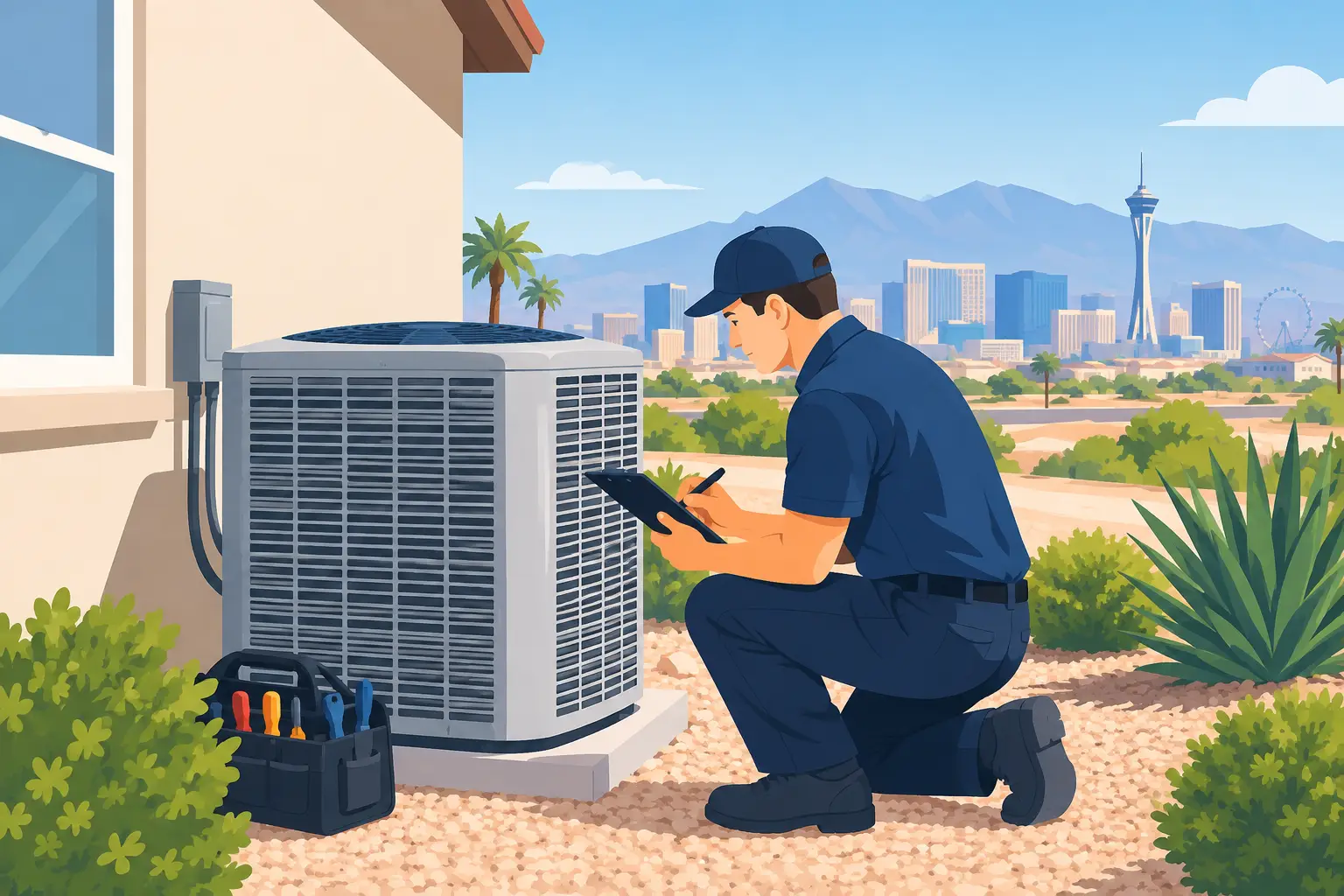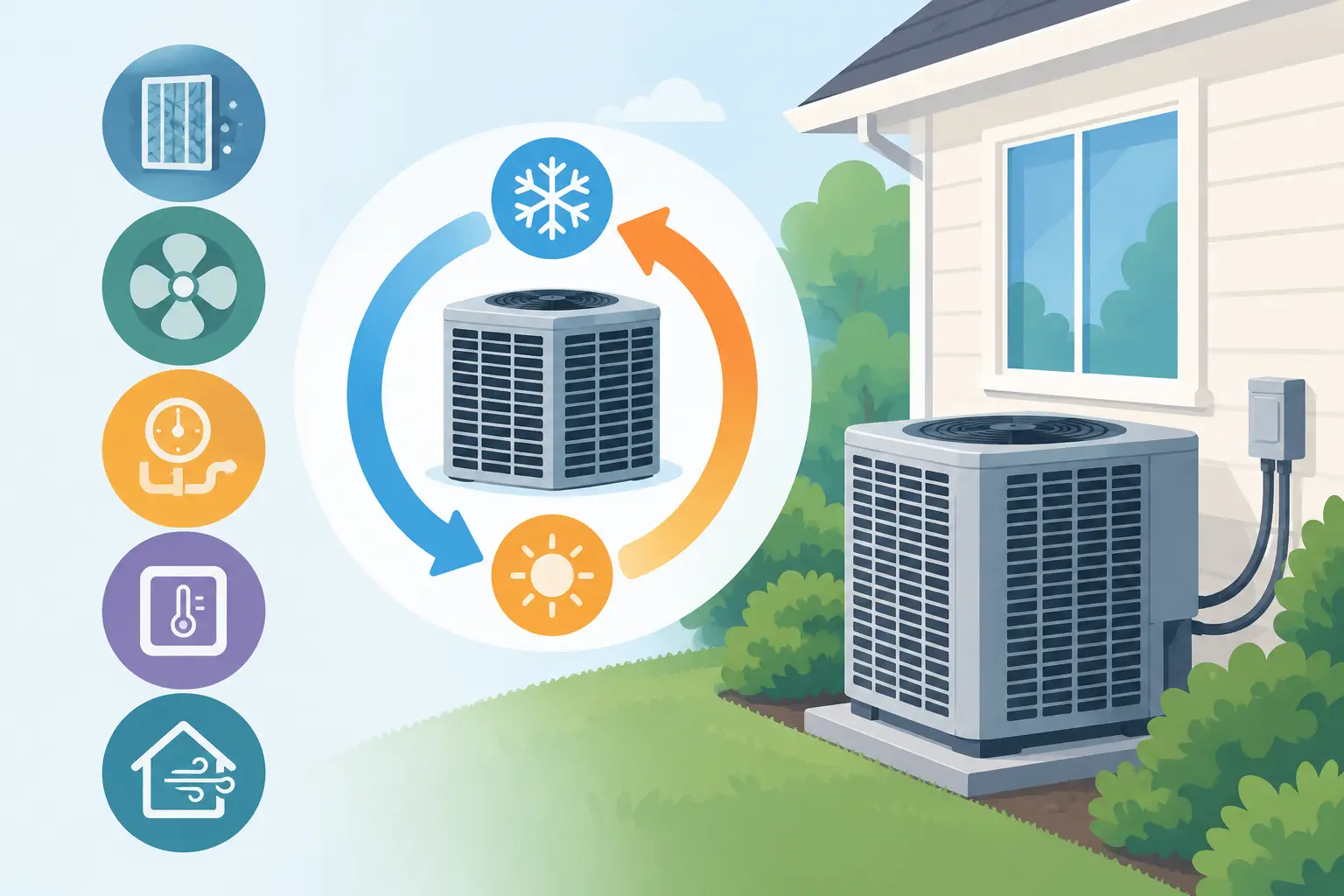
Your air conditioner stops cooling, the thermostat is still on, and the outdoor unit is silent. Before assuming the system has failed, check whether the AC breaker has tripped. Knowing how to reset tripped AC breaker safely can restore cooling after a minor overload, but a breaker that trips repeatedly is a warning sign, not a reset-and-forget inconvenience.
For homeowners and property managers in Washougal, Vancouver, and across Clark County, the safest approach is simple: reset the breaker once, watch how the system responds, and call for service if it trips again. Repeated electrical interruptions can point to an AC repair issue, a failing component, or an electrical problem that needs professional attention.
What a Tripped AC Breaker Means
Your electrical panel uses circuit breakers to stop power when a circuit draws more current than it should. Most central air conditioners and heat pumps have a dedicated double-pole breaker, often labeled “AC,” “air conditioner,” “heat pump,” “condenser,” or “HVAC.” It is usually larger than the breakers serving lights and outlets because cooling equipment uses 240-volt power.
A breaker can trip for a harmless, one-time reason, such as a brief power fluctuation or an unusual demand when the system starts. It can also trip because the equipment is working too hard or developing a fault. A dirty outdoor coil, loose electrical connection, failing capacitor, worn compressor, damaged wiring, or a problem with the blower motor can all contribute.
The key distinction is frequency. A single trip that resets and stays on may not require an emergency visit. A breaker that trips again immediately, trips every time the AC starts, or trips during normal operation needs diagnosis.
How to Reset a Tripped AC Breaker
Start by turning your thermostat to the Off position. This prevents the air conditioner from trying to start while you are resetting power. If you have a heat pump, turn off heating or cooling mode at the thermostat rather than relying only on a temperature adjustment.
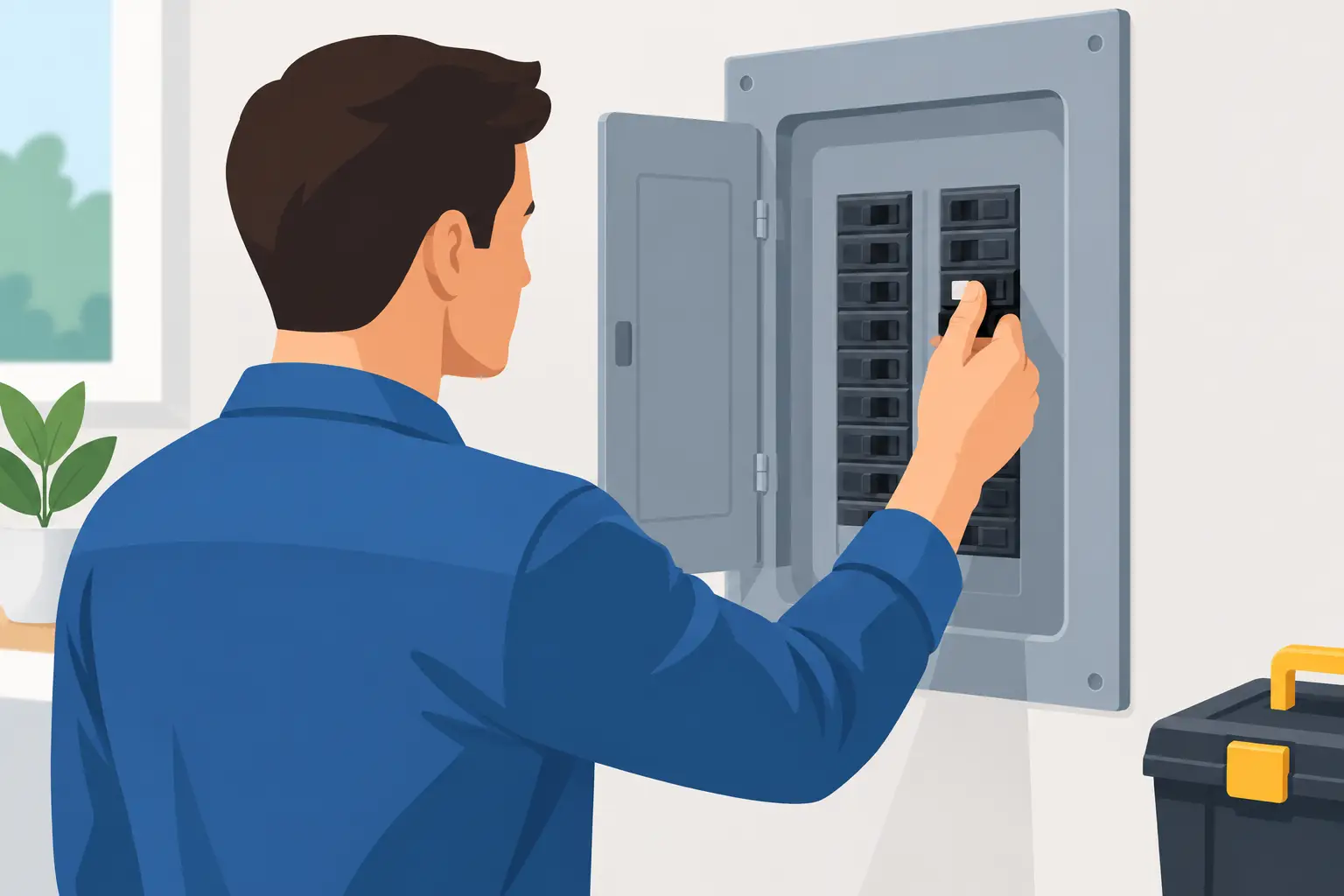
Go to your home’s electrical panel. In many Clark County homes, the main panel is located in a garage, utility room, basement, exterior wall, or storage area. Use a flashlight if needed, but do not work around a panel in standing water, moisture, or poor visibility.
Look for the AC or heat-pump breaker. A tripped breaker may sit slightly between the On and Off positions, though this is not always obvious. For a double-pole breaker, both connected handles should be treated as one breaker.
To reset it correctly, push the breaker firmly all the way to Off first. Then push it firmly back to On. Simply pushing a tripped breaker toward On without moving it fully to Off may not reset the internal mechanism.
Wait about five minutes before turning the thermostat back on. This gives the system’s compressor time to equalize pressure before restarting. Then set the thermostat to Cool, lower the setting a few degrees below the indoor temperature, and listen for the system to begin its normal startup cycle.
The indoor blower may start first. The outdoor unit should follow shortly after. Cool air can take several minutes to circulate through the home, especially if the system has been off for a while.
When Not to Reset the Breaker
Do not reset a breaker if you see scorch marks on the panel, smell burning plastic or hot wiring, hear buzzing from the panel, or notice that the breaker feels hot. Leave it off and arrange for qualified electrical or HVAC service. These symptoms can indicate an unsafe electrical condition.
You should also avoid resetting the breaker if the outdoor unit is surrounded by standing water, if the disconnect box or wiring appears damaged, or if a recent storm caused visible electrical damage. Southwest Washington’s wet weather does not automatically mean an AC problem, but water near electrical equipment should always be taken seriously.
Never hold a breaker in the On position, tape it on, replace it with a larger breaker, or repeatedly cycle it until the AC runs. Breakers are sized to protect the wiring and equipment. Bypassing that protection can damage the air conditioner and create a fire risk.
Why Your AC Breaker May Keep Tripping
A breaker that will not stay on often means the system is drawing excessive electrical current. The cause may be relatively straightforward, such as restricted airflow from a severely clogged filter. More often, the issue requires testing equipment and electrical connections under load.
A dirty air filter can contribute by limiting airflow across the indoor coil. When airflow is poor, the system can run longer and strain components. Replace a visibly dirty filter with the correct size and type, then make sure supply and return vents are open and unobstructed. This is a sensible homeowner check, but it will not solve every breaker problem.
Outdoor-unit problems are also common. Leaves, cottonwood debris, grass clippings, and dirt can block the condenser coil, making it harder for the system to release heat. Keep at least a couple of feet of clear space around the unit. Do not use a pressure washer or insert tools into the coil fins, which can cause further damage.
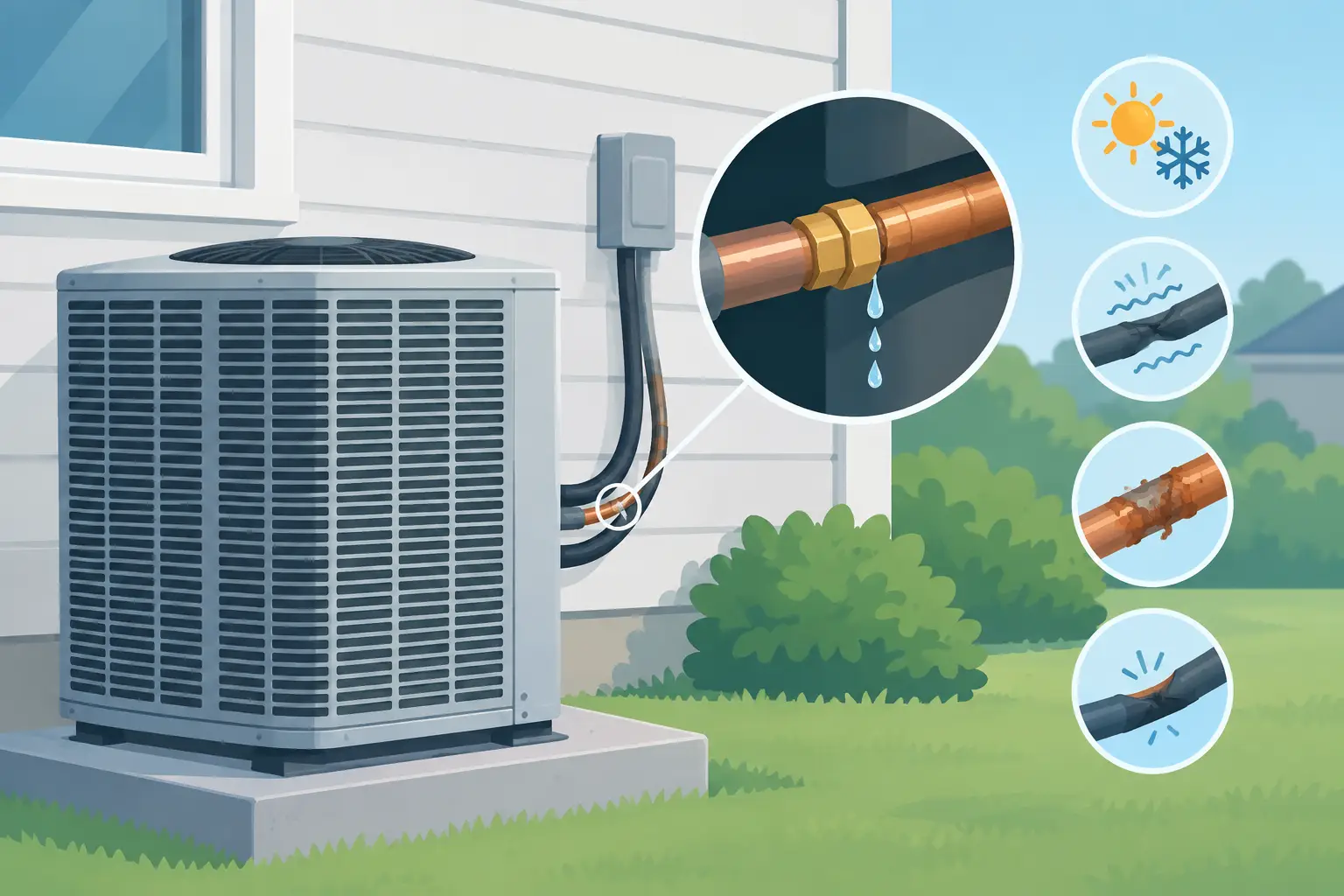
Electrical components inside the outdoor unit may be the real source of the trip. A failing capacitor can prevent the compressor or fan motor from starting efficiently. A worn contactor can overheat or fail to make proper contact. Compressor problems, shorted wiring, and motor failures are more serious issues that require professional testing.
In some cases, the breaker itself may be weak or improperly sized. That does not mean it should be swapped casually. An HVAC technician and, when necessary, a licensed electrician can determine whether the problem originates in the equipment, circuit wiring, disconnect, or panel.
Check the Outdoor Disconnect, but Do Not Confuse It With the Breaker
Many outdoor AC units have a nearby service disconnect box. This lets a technician shut off power at the unit during repairs. It is not a substitute for the breaker in your main electrical panel, and it does not always show whether a circuit has tripped.
If the disconnect has a removable pull-out block, leave it alone unless you understand its operation and have a specific reason to shut off the unit. Resetting the main breaker is the appropriate first step for a tripped circuit. Opening electrical equipment to investigate wiring or components is not a homeowner repair.
A Safe Response if the Breaker Trips Again
If the breaker trips immediately after you reset it, turn the thermostat off and leave the breaker off. If it trips after the outdoor unit starts, do the same. Avoid trying again later in the day to see whether the problem has disappeared.
Before scheduling service, note what happened. Did the breaker trip during startup, after an hour of cooling, during a hot afternoon, or after a storm? Was the indoor blower running? Did you hear humming, clicking, or unusual noise from the outdoor unit? These details help an HVAC technician narrow the diagnosis more efficiently.
For a rental property or small business, notify occupants that the system is off and avoid demanding cooling from a unit with a tripped breaker. Maintaining a clear record of when the issue occurred can also help identify patterns, especially in systems that serve multiple offices, retail areas, or tenant spaces.
When to Call for AC or Heat Pump Service
Call for professional service when the breaker trips more than once, the AC will not start after one reset, airflow is weak, the system makes unusual electrical noises, or the home is not cooling normally. A technician can inspect the electrical components, refrigerant-side performance, motors, wiring, and safety controls without guessing.
Creekside HVAC provides reliable AC repair and heat-pump service for homeowners and local businesses throughout Washougal, Vancouver, and Clark County. A proper diagnosis helps protect your equipment, restore dependable comfort, and prevent a small electrical issue from turning into a larger repair.
A breaker is doing its job when it trips. Reset it once with care, then let the system’s response tell you what to do next. If it will not stay on, leaving it off and arranging expert service is the safest path back to dependable cooling.