Your thermostat says the AC is on. You can hear the system running, and air is coming through the vents, but the house is still warm. When an AC not cooling but running problem appears, the cause can range from a restricted air filter to a failed outdoor component. A few safe checks may identify a simple issue, but continued operation can turn a manageable repair into more significant equipment damage.
For homeowners, property managers, and local businesses in Washougal, Vancouver, and Clark County, the right response is to check what you safely can, protect the equipment, and arrange professional AC repair when cooling does not return.
Why Is My AC Not Cooling but Running?
An air conditioner does more than move air. The indoor unit pulls warm air across the evaporator coil, where refrigerant absorbs heat. The outdoor unit releases that heat outside. If airflow, refrigerant circulation, electrical controls, or the outdoor condenser are not working correctly, the blower may continue running without delivering cool air.
This is why a running AC is not necessarily a functioning AC. The sound of the indoor fan only confirms that one part of the system has power. It does not confirm that the compressor is operating, the condenser fan is working, or the refrigerant system is able to transfer heat.
In Southwest Washington, this issue often becomes apparent during the first sustained warm stretch of the season. Equipment that sat unused through cooler weather may reveal a weak capacitor, dirty coil, thermostat problem, or developing refrigerant leak when it is finally asked to run for several hours.
Start With These Safe Checks
Before scheduling service, take a few minutes to rule out the most common non-mechanical causes. These checks do not require opening electrical panels or handling refrigerant components.
Confirm the thermostat settings
Set the thermostat to Cool, then set the temperature at least 3 to 5 degrees below the current indoor temperature. Make sure the fan setting is on Auto rather than On. When the fan is set to On, it can keep circulating room-temperature air between cooling cycles, making it seem as if the system is not cooling.
If the thermostat screen is blank or unresponsive, replace the batteries if your model uses them. A thermostat issue can also involve wiring or control-board communication, which requires an HVAC technician to diagnose correctly.
Check the air filter and return vents
A severely clogged filter restricts airflow across the indoor coil. Over time, that restriction can cause the coil to freeze. A frozen coil cannot absorb heat effectively, so airflow from the vents may feel weak, warm, or only slightly cool.
Replace a visibly dirty disposable filter with the correct size and type. Also confirm that return vents are not blocked by furniture, storage, or rugs. Avoid installing a filter that is more restrictive than your system can handle unless an HVAC professional has recommended it.
Look at the outdoor unit from a safe distance
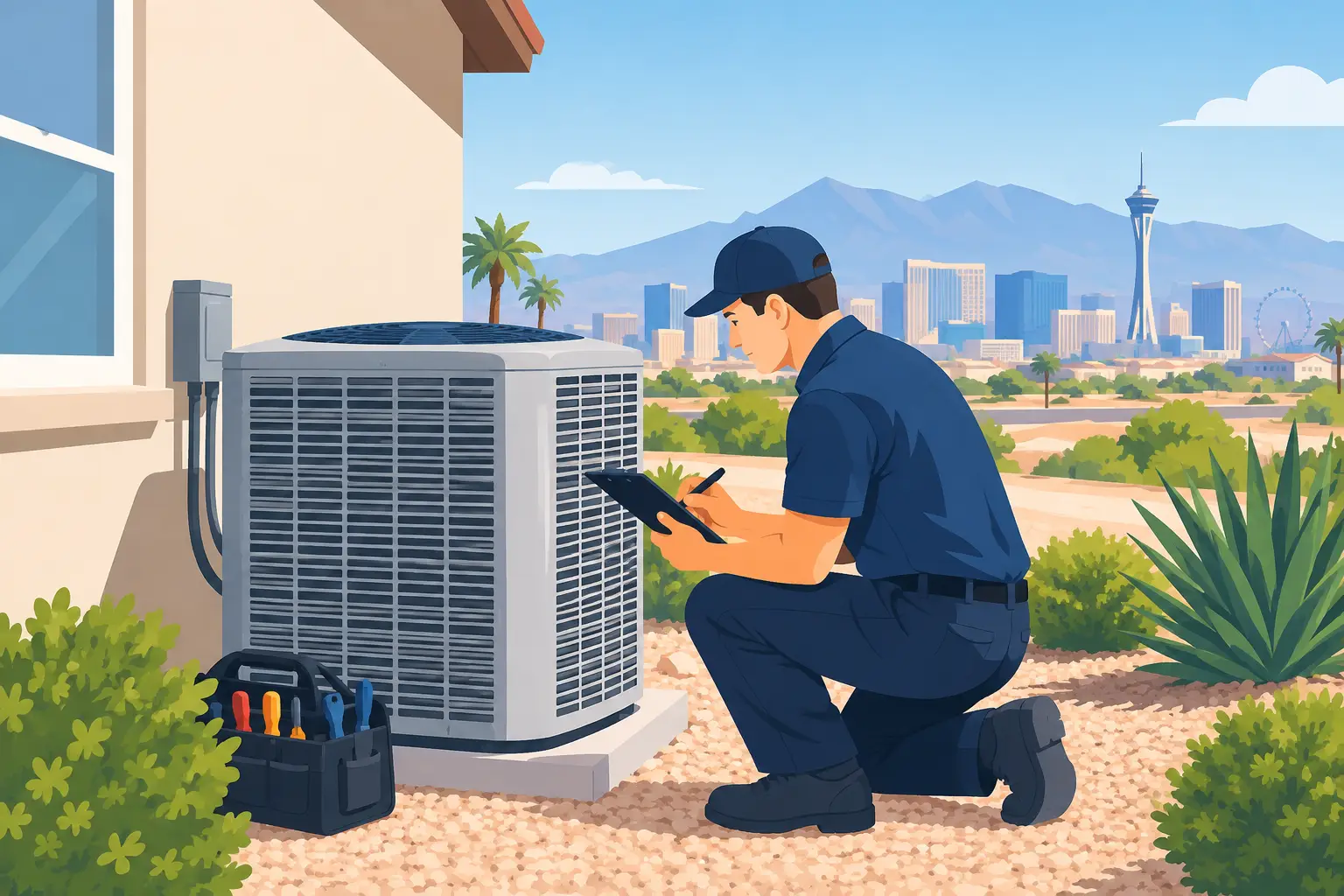
With the system calling for cooling, check whether the outdoor unit is running. You should generally hear it operating and see the top fan turning. Keep hands, tools, and loose clothing away from the unit, and do not remove its service panel.
If the outdoor unit is completely silent while the indoor blower runs, the issue may involve a tripped breaker, disconnect, capacitor, contactor, wiring problem, or compressor protection switch. Check the main electrical panel once for a tripped AC breaker. If it trips again after resetting, leave it off and call for service. Repeated resets can damage components or create an electrical safety concern.
Check for ice and unusual moisture
Look for frost or ice on the refrigerant line near the indoor or outdoor equipment. Signs of icing may also include weak airflow, water around the indoor unit, or a system that cools briefly and then stops keeping up.
If you see ice, turn the thermostat from Cool to Off and set the fan to On to help thaw the coil. Do not chip away ice or continue operating the cooling cycle. Once the ice has melted, the underlying cause still needs attention. It may be a dirty filter, a blower problem, a dirty coil, or low refrigerant.
Common AC Problems That Need Professional Repair
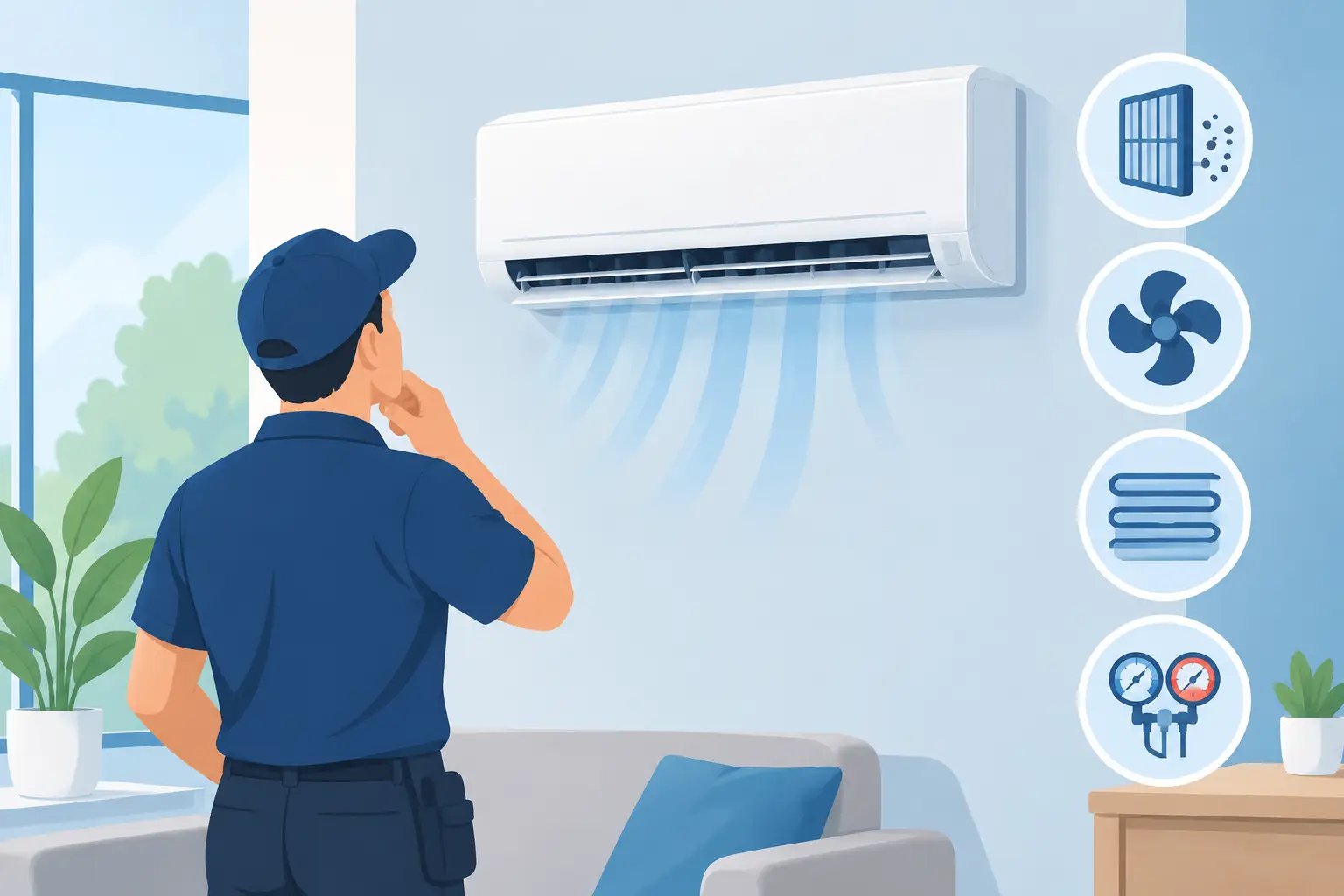
Some cooling failures are not visible from the outside. A trained technician uses electrical testing, pressure readings, temperature measurements, and airflow checks to identify the actual fault rather than replacing parts based on a guess.
A failed capacitor or contactor
The capacitor helps start and run the compressor and outdoor fan motor. The contactor is the electrical switch that sends power to the outdoor equipment when the thermostat calls for cooling. Either part can wear out over time, especially after repeated seasonal use.
You may hear humming from the outdoor unit, notice that the fan will not start, or find that the indoor blower operates while the condenser does not. These components store and carry hazardous electrical energy, so they should only be tested and replaced by a qualified HVAC professional.
Low refrigerant from a leak
Refrigerant does not get used up under normal operation. If the level is low, there is usually a leak that needs to be located and repaired. Adding refrigerant without addressing the leak is a temporary measure at best and can leave the system underperforming again soon after.
Low refrigerant can cause poor cooling, a frozen evaporator coil, higher energy use, and added strain on the compressor. A proper repair includes checking the system for leaks, correcting the source when practical, and charging the equipment to manufacturer specifications.
A dirty condenser or evaporator coil
The outdoor condenser coil releases heat. When it is covered by cottonwood, dust, grass clippings, or debris, heat cannot escape efficiently. The system may run for long periods without reaching the thermostat setting.
The indoor evaporator coil can also collect dust when filters are neglected. Coil cleaning is not always a simple spray-and-rinse task. The wrong cleaning method or too much water around electrical equipment can create another problem, so professional cleaning is often the better choice when buildup is significant.
Compressor, fan motor, or control failure
Older systems can develop more serious mechanical or electrical failures. A compressor that is overheating, an outdoor fan motor that has stopped, or a damaged control board can all leave you with an AC that appears to run but does not cool the building.
The repair decision depends on the part involved, the system age, repair cost, overall condition, and efficiency of the current equipment. For a newer system, a targeted repair may make clear financial sense. For equipment near the end of its service life with repeated failures, replacement may offer better reliability and operating costs.
When to Turn the AC Off
Turn the system off and request service if you smell burning, hear loud grinding or screeching, see ice on refrigerant lines, find water leaking around indoor equipment, or have a breaker that trips repeatedly. These signs can indicate a problem that worsens when the system continues running.
If the AC is simply blowing warm air but there are no unusual sounds or smells, avoid lowering the thermostat farther and farther. That will not make the unit cool faster. It only keeps the system running longer and may increase strain on already-failing parts.
For commercial spaces, act early. A warm office, retail area, or rental property can quickly become uncomfortable for employees, customers, or tenants. Prompt diagnosis helps limit disruption and protects inventory or equipment that may be sensitive to heat.
Prevent Another Cooling Failure
Basic maintenance prevents many airflow and coil-related problems, though it cannot eliminate every unexpected part failure. Change filters on a schedule that fits your household, pets, occupancy, and filter type. Keep vegetation and debris away from the outdoor unit, and do not stack items against it.
Annual cooling service gives a technician the opportunity to inspect electrical components, clean equipment as needed, verify drainage, assess airflow, and identify wear before the hottest days arrive. Heat pumps should receive the same attention because they provide both heating and cooling and work through more of the year.
When reliable comfort matters, Creekside HVAC provides expert heating and cooling services for homeowners and local businesses throughout Washougal, Vancouver, and Clark County. A clear diagnosis can help you decide whether a repair is the right next step or whether aging equipment deserves a replacement conversation.
A running air conditioner that is not cooling is frustrating, but it is also useful information. Protect the system by avoiding repeated resets or continued operation with ice or electrical warning signs, then have the cause identified before a small fault becomes a no-cooling emergency.