
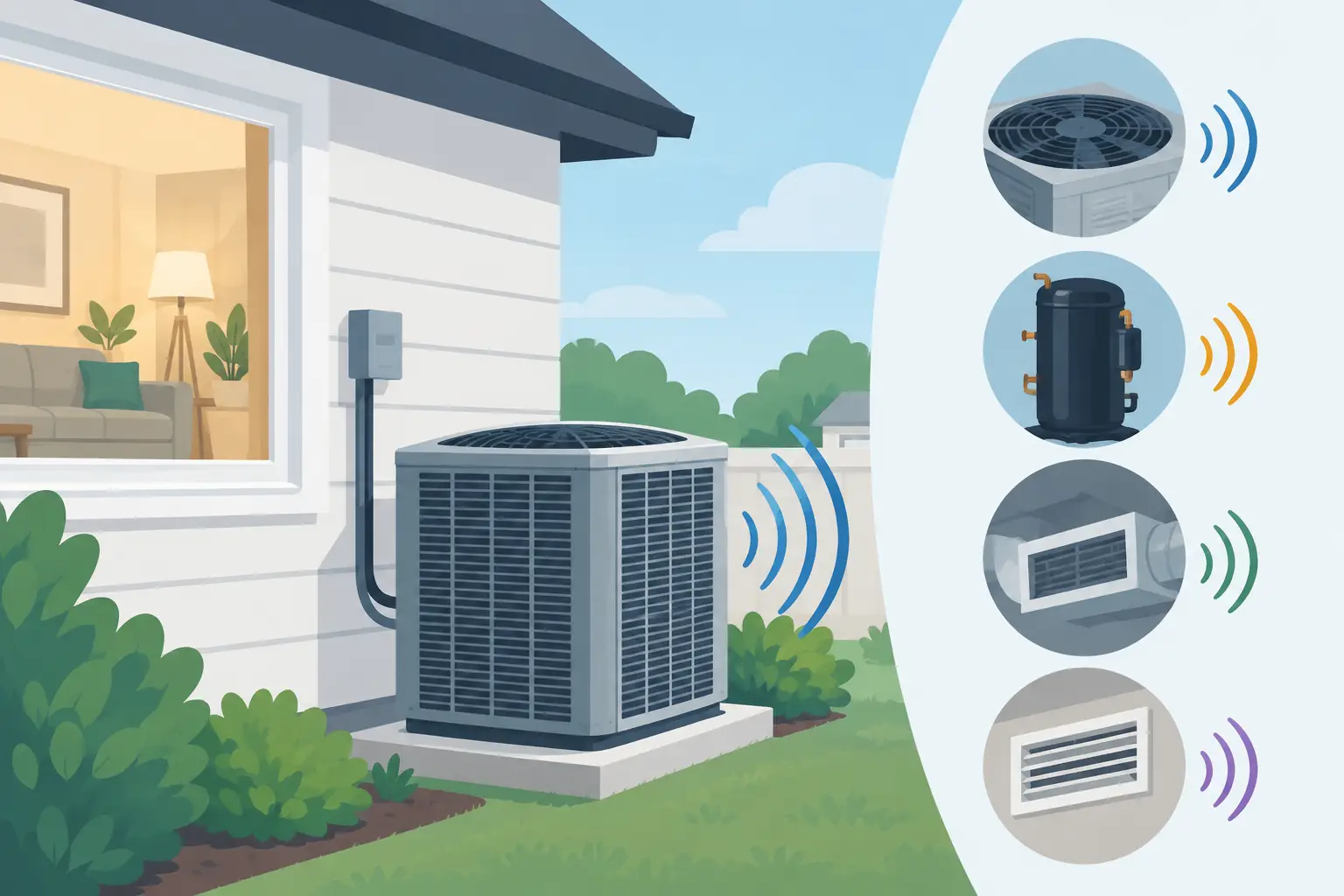
A heating or cooling system rarely operates in complete silence. You may hear airflow at a register, the low hum of an outdoor unit, or a brief click when equipment starts. This HVAC noise guide helps Clark County homeowners separate normal operating sounds from noises that deserve prompt professional attention.
The timing, location, and pattern of a sound matter as much as the sound itself. A single pop from ductwork on a cold morning is different from a furnace that bangs at every ignition cycle. If a new noise arrives with weak heating, poor cooling, unusual odors, higher energy bills, or repeated cycling, it is time to take it seriously.
What Normal HVAC Sounds Usually Sound Like
Most systems make a few predictable noises during normal operation. Air moving through supply vents creates a soft rush. A thermostat may click as it calls for heating or cooling. An air conditioner or heat pump outdoor unit will hum while the compressor and fan operate, and a furnace blower produces a steady sound while circulating warm air.
Metal ductwork can also make a light ticking or popping noise as it expands and contracts with temperature changes. This is especially common when heating starts after the home has been cool overnight. The sound should be brief and should not be paired with rattling, reduced airflow, or rooms that no longer heat evenly.
Heat pumps deserve a little extra context in Southwest Washington. During colder, damp weather, a heat pump periodically enters a defrost cycle. You may hear a change in the outdoor unit's sound, followed by water dripping or steam rising from the unit. That can be normal. Loud grinding, repeated hard banging, or a unit that stays iced over are not normal and should be checked.
HVAC Noise Guide: Sounds That Need Attention
A sudden or persistent sound is often the system's way of signaling wear, a loose component, or a developing mechanical issue. Some problems are relatively straightforward, while others can damage major equipment if operation continues.
Banging or loud popping
A loud bang from a gas furnace at startup can indicate delayed ignition. Gas is allowed to build up briefly before it ignites, creating a small but forceful combustion event. This is not a noise to ignore. Turn the system off and arrange a furnace inspection, particularly if you also notice a gas smell, soot, or unreliable heating.
Banging may also come from ductwork that is shifting with temperature changes or from a loose panel. Duct-related popping is typically less urgent, but a technician can determine whether duct supports, insulation, sizing, or airflow restrictions are contributing to the problem.
Rattling or vibrating
Rattling can be as simple as a loose access panel, screw, register cover, or outdoor unit debris. Before calling for service, you can safely look for leaves, branches, or other material resting against the exterior cabinet. Do not put hands into the unit or remove electrical panels.
If the rattle continues after obvious debris is cleared, it may involve a loose blower assembly, fan blade, motor mount, or compressor component. A vibration that becomes louder over time should be diagnosed before it damages surrounding parts.
Squealing or screeching
High-pitched squealing commonly points to a motor, blower wheel, belt on older equipment, or bearing issue. Many modern residential systems do not use belts, so the source depends on the age and design of your equipment. Either way, persistent squealing is not a normal operating sound.
A failing blower motor can leave the home with limited airflow even if the furnace or heat pump is still producing heat. Shutting the system down until it is inspected may prevent a minor mechanical repair from turning into a larger replacement.
Grinding or metal-on-metal noise
Grinding is one of the clearest signs that professional service is needed. It may indicate worn motor bearings, a damaged blower wheel, or an issue inside the outdoor unit. Continued operation can cause additional damage, so turn the equipment off at the thermostat if it is safe to do so and schedule service.
For an air conditioner or heat pump, grinding from the outdoor cabinet should be treated as a priority. The compressor and fan system are expensive components, and prompt diagnosis can make a meaningful difference in repair options.
Hissing, bubbling, or whistling
A short hiss during a heat pump defrost cycle may be normal. Continuous hissing, however, can signal a refrigerant leak or a ductwork air leak. Bubbling or gurgling can also point to refrigerant movement where it should not be, especially when cooling performance has declined.
Whistling often comes from restricted airflow. A clogged filter, blocked return vent, undersized ductwork, or a partially closed damper may be responsible. Start by checking the filter and making sure supply and return vents are open and unobstructed. If the sound continues, a technician can evaluate static pressure and airflow rather than simply treating the noise.
Clicking that will not stop
One click at startup or shutdown is usually ordinary. Repeated clicking without the equipment starting can signal a failing relay, capacitor, control board, thermostat issue, or ignition problem. When the system is attempting to start over and over, avoid repeated thermostat adjustments. Those attempts can add stress to electrical and mechanical components.
Where the Noise Is Coming From Matters
Pinpointing the sound's location gives a technician useful information. A noise at an indoor furnace or air handler may involve the blower, filter area, condensate drain, or electrical controls. Noise near a vent may be related to airflow or ductwork. Noise at the outdoor AC or heat-pump unit often involves the fan, compressor, contactor, or cabinet.
Pay attention to when it occurs as well. Does it happen only at startup, only after the system has run for 15 minutes, or only in heating mode? Does it happen during every cycle? A short phone video can be helpful, provided you record from a safe distance and do not open panels or bypass safety controls.
Safe Checks Homeowners Can Make
A few basic checks can address minor noise causes without putting you at risk. Replace a dirty filter with the correct size and orientation. Confirm that furniture, rugs, and stored items are not blocking return grilles or supply vents. Look at the outdoor unit for loose debris around the cabinet, and make sure the area has room for airflow.
You can also check that the thermostat is set correctly and that access panels are fully seated. Do not attempt to tighten internal wiring, lubricate motors, recharge refrigerant, or repair gas components. Those tasks require proper training, testing equipment, and safety procedures.
If you smell gas, see smoke, notice burning odors that do not quickly fade, or hear a severe bang or grinding sound, turn the system off if you can do so safely. Leave the area and contact the appropriate emergency utility provider when a gas leak is suspected. For equipment concerns that are not immediate hazards, arrange an HVAC diagnostic visit rather than waiting for a complete breakdown.
When Repair Makes Sense and When Replacement May Be Better
Not every noisy system needs replacement. A loose panel, worn capacitor, failing motor, damaged fan blade, or airflow restriction can often be repaired. The right decision depends on the equipment's age, condition, repair history, efficiency, and the condition of related components such as ductwork.
For example, an older furnace with a one-time blower repair may still have years of useful life. But repeated repairs, noisy operation, uneven comfort, and rising utility costs may indicate that replacement is the more dependable long-term choice. The same applies to an aging air conditioner or heat pump with compressor-related noise. A qualified technician should explain the source of the noise, the repair options, and the practical trade-offs before you decide.
Creekside HVAC provides expert heating and cooling services for homeowners and local businesses in Washougal, Vancouver, and across Clark County. Whether the issue is a noisy furnace, an AC unit that will not start quietly, or a heat pump making unfamiliar sounds, a proper diagnosis helps protect comfort and equipment life.
A new sound does not always mean an emergency, but it is worth noticing. Write down when you hear it, how long it lasts, and whether heating or cooling performance has changed. That small amount of information can help a local HVAC professional find the cause faster and keep a manageable repair from becoming an inconvenient failure.