
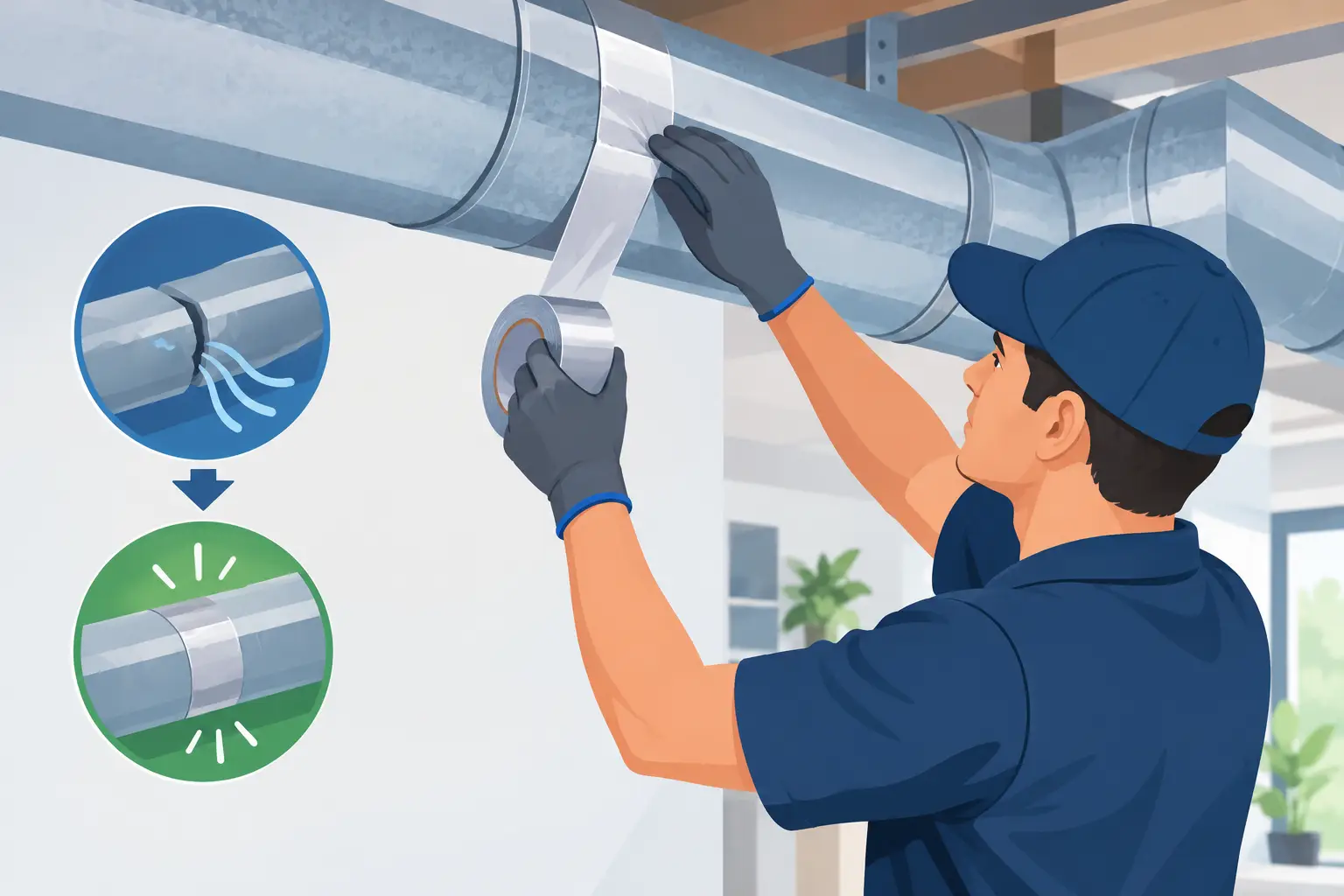
A room that never seems to reach the thermostat setting, dusty vents, weak airflow, and unusually high utility bills can all point to the same issue: conditioned air is escaping before it reaches the rooms you use. Knowing how to seal leaking ducts can improve comfort and reduce waste, but the right repair depends on where the leak is and what type of ductwork you have.
For homeowners and property managers in Washougal, Vancouver, and across Clark County, duct leaks often hide in attics, crawl spaces, garages, and behind finished walls. A small gap at an accessible duct joint may be a practical do-it-yourself repair. Leaks in damaged flex duct, disconnected runs, or concealed ductwork require a more complete diagnosis.
Why Leaking Ducts Create Bigger Comfort Problems
Your heating and cooling system moves air through a closed network of supply and return ducts. Supply ducts deliver heated or cooled air to each room. Return ducts bring indoor air back to the furnace, air handler, or heat pump to be conditioned again.
When a supply duct leaks, some of the air you paid to heat or cool goes into an attic, crawl space, or wall cavity instead of your living area. A return-side leak can be just as troublesome. It may pull dusty, humid, or unconditioned air into the system, affecting indoor air quality and making the equipment work harder.
Duct leakage can be especially noticeable during temperature swings in Southwest Washington. Your heat pump or furnace may run longer during a cold, damp stretch, while an air conditioner may struggle to keep upper rooms comfortable during warm weather. Sealing leaks helps, but it will not correct an undersized system, a clogged filter, a failing blower motor, or poorly balanced duct design. That is why identifying the cause matters before applying sealant.
Signs You May Have Leaking Ductwork
You do not need to see a gap in the duct to suspect an air leak. Start with the performance of the home or building. One or two persistently uncomfortable rooms, airflow that feels weak at certain registers, and a system that runs for long cycles are common warning signs.
Other clues include dust streaks around duct connections, loose insulation near attic ductwork, whistling sounds when the blower is running, and visible tape peeling away from joints. If the ductwork runs through a crawl space, you may notice musty odors or colder floors when return ducts draw in unconditioned air.
A quick visual inspection can reveal obvious problems, but it cannot confirm the full extent of duct leakage. Multiple small leaks can add up, particularly in older homes or properties where ductwork has been modified over time.
How to Seal Leaking Ducts in Accessible Areas
Only attempt a repair when the duct joint is easy to reach, stable, and in otherwise good condition. Turn off the heating and cooling system at the thermostat before working around the ducts. If you are entering an attic or crawl space, use safe footing, adequate lighting, gloves, and a respirator if dust or insulation is present.
Find the leak and inspect the connection
Look first at joints, elbows, branch connections, and the areas where ducts attach to supply boots or plenums. Metal ducts may have gaps at seams or screws. Flexible ducts can separate from collars, sag, tear, or become crushed. Check for disconnected sections before focusing on small leaks.
If a flex duct has pulled away from a collar, the repair usually involves reattaching the inner liner securely with an approved mechanical fastener or draw band, then sealing the connection. The insulation jacket and outer vapor barrier must also be restored. Simply wrapping the outside with tape may leave the inner air path open and continue the leak.
Clean and dry the surface
Mastic and approved foil HVAC tape need a clean surface to adhere properly. Remove loose old tape, dust, and moisture from the duct connection. Do not use standard cloth-backed duct tape. Despite its name, it commonly dries out and fails under attic, crawl-space, and temperature conditions.
For metal duct joints, foil HVAC tape labeled for duct sealing can work well on small seams when it is pressed firmly into place. Mastic duct sealant is often the more durable option because it creates a flexible, airtight coating over irregular gaps. Use a brush or gloved hand to apply it according to the product instructions.
Seal the joint, not just the visible edge
Cover the full seam and overlap the material beyond the gap. For a larger joint or a connection that shifts slightly, mastic paired with fiberglass mesh tape provides added reinforcement. Apply one layer of mastic, embed the mesh, then cover it with another layer of mastic.
Avoid blocking access panels, dampers, condensate components, or equipment labels. Do not seal over damaged duct sections that need replacement. A crushed or torn flex duct, corroded metal duct, or disconnected trunk line should be repaired correctly rather than covered with sealant.
Restore insulation after the seal cures
Ducts located outside the conditioned space should be insulated after air sealing. Insulation reduces heat gain and heat loss, but it cannot stop moving air from escaping through a gap. Seal first, then replace or secure the insulation and vapor barrier so the duct remains protected from moisture and temperature changes.
When a DIY Duct Repair Is Not Enough
Some duct leaks are not safely accessible, and others indicate a larger system problem. Call a qualified HVAC professional if you find ductwork that is disconnected, wet, moldy, heavily damaged, or located behind finished ceilings or walls. Professional service is also the better choice when the system has widespread comfort issues rather than one obvious loose joint.
A technician can inspect the duct system, evaluate airflow, check static pressure, and identify restrictions that are not visible from the registers. This is valuable because sealing the wrong areas can sometimes create new problems. For example, closing off designed airflow paths or sealing around equipment components improperly can increase pressure in the duct system and strain the blower.
Commercial spaces and larger homes may have more complex zoning, multiple return paths, long duct runs, or equipment in difficult locations. In these cases, a professional assessment helps prioritize repairs that will make a measurable difference in comfort and operating cost.
Do Not Overlook the Return Ducts
Homeowners often focus on supply ducts because they feel the air coming from registers. Return ducts deserve the same attention. A leaking return can pull air from an attic, garage, crawl space, or wall cavity into the HVAC system. That can introduce dust, odors, insulation particles, and humidity into the air stream.
Return leaks near combustion appliances need particular care. A qualified technician should evaluate any concern involving furnaces, water heaters, fireplaces, or potential combustion gases. Never rely on tape or mastic as a substitute for correcting unsafe venting or combustion-air problems.
Keep Duct Sealing From Becoming a Repeat Repair
Once accessible leaks are sealed, check the system at the start of each heating and cooling season. Replace filters on schedule, keep registers open and unobstructed, and watch for changes in airflow or new temperature differences between rooms. A filter that is too restrictive or overdue for replacement can make duct problems feel worse by reducing airflow throughout the home.
If your furnace, air conditioner, or heat pump still runs excessively after duct repairs, the issue may be equipment-related. Refrigerant concerns, thermostat problems, blower issues, aging equipment, and incorrect system sizing can all produce similar symptoms. Creekside HVAC provides trusted heating and cooling services for homeowners and local businesses throughout Clark County when duct concerns connect to a larger comfort problem.
A properly sealed duct system should quietly deliver conditioned air where it belongs. If the repair is accessible and limited, careful sealing can be worthwhile. If the leaks are hidden, widespread, or tied to uneven comfort and rising energy use, getting an expert inspection is the clearest path back to dependable heating and cooling.