A furnace that is too small may run for hours on a cold Washougal morning and still leave bedrooms chilly. A furnace that is too large can create a different problem: short heating cycles, uneven temperatures, excess wear, and higher operating costs. This guide to sizing home furnace systems explains what determines the right capacity and why the furnace’s BTU rating alone never tells the whole story.
What Furnace Size Actually Means
Furnaces are generally sized by heating output, measured in BTUs per hour. A BTU is the amount of heat required to raise one pound of water by one degree Fahrenheit, but homeowners do not need to calculate that by hand. The practical question is how much heat your home loses on the coldest expected day.
A furnace’s input rating and output rating are not always the same. For example, a 100,000-BTU furnace with 95% annual fuel utilization efficiency (AFUE) delivers about 95,000 BTUs of usable heat per hour. The rest leaves through the venting system. When comparing replacement equipment, make sure the quoted capacity refers to delivered output, not only fuel input.
The goal is not to buy the biggest unit that fits. It is to install equipment that can maintain comfortable indoor temperatures during local winter conditions without cycling on and off excessively.
Why Square Footage Is Only a Starting Point
Square footage can provide a rough initial estimate, but it cannot properly size a furnace by itself. Two 2,000-square-foot homes in Vancouver can have very different heating needs. One may have newer windows, sealed ductwork, a conditioned crawl space, and upgraded attic insulation. The other may have original single-pane windows, air leaks around doors, and ductwork running through an uninsulated attic.
Ceiling height also changes the calculation. A home with vaulted ceilings has more air volume to heat than a home with standard eight-foot ceilings. Open floor plans, large west-facing windows, additions, finished basements, and rooms over garages can all affect how heat moves through the home.
A simple rule-of-thumb range may be useful for a preliminary conversation, but it should not be used to select equipment. Sizing by square footage alone often leads to oversized furnaces because it ignores the home’s insulation, construction, and actual heat loss.
The Factors That Determine the Right Furnace Capacity
A qualified HVAC contractor uses a room-by-room load calculation, commonly based on Manual J methods, to determine heating requirements. This calculation considers the building as a complete system rather than treating every home of the same size alike.
Key inputs include the home’s location and local design temperature, exterior wall and attic insulation, window size and efficiency, air leakage, ceiling heights, foundation type, and the direction each wall and window faces. The calculation also accounts for heat loss through floors, doors, ducts, and ventilation.
In Clark County, winter weather is often damp and moderate compared with colder inland climates, but temperatures can still drop low enough to expose weak points in a heating system. A properly sized system should handle those colder periods while operating efficiently through the more typical conditions homeowners experience across the season.
Ductwork deserves close attention. Even a correctly sized furnace cannot deliver reliable comfort if the ducts are undersized, leaking, poorly insulated, or improperly balanced. Restricted ducts can limit airflow, increase noise, and cause the furnace to overheat or shut down. During a replacement project, the equipment, blower capacity, duct design, and return-air path should be evaluated together.
Guide to Sizing Home Furnace Equipment: Avoid Oversizing
Oversizing is one of the most common and costly furnace installation mistakes. Homeowners sometimes assume extra capacity provides extra protection during cold weather. In practice, an oversized furnace usually heats the thermostat area too quickly, then shuts off before warm air has circulated evenly through the house.
These short cycles can create noticeable temperature swings. Rooms farther from the thermostat may remain cool, while rooms near supply vents become too warm. The repeated starting and stopping also places more stress on ignition components, motors, and controls.
An oversized unit may also fail to pair well with the existing duct system. More heating capacity often requires more airflow. If the ducts cannot support that airflow, comfort and equipment performance suffer.
Undersizing has its own consequences. A furnace with insufficient capacity may run nearly continuously during a cold snap and struggle to reach the thermostat setting. However, a system that runs for longer, controlled cycles in normal weather is not automatically undersized. Longer run times can be efficient and can improve temperature consistency. The correct answer comes from a load calculation, not from how frequently a current furnace turns on.
Account for Efficiency, Fuel Type, and System Design
AFUE measures how efficiently a gas furnace converts fuel into usable heat over a season. Higher-AFUE equipment can reduce fuel waste, but it does not change the home’s actual heating load. If your home requires 60,000 BTUs of delivered heat, installing a higher-efficiency furnace means the unit uses less fuel to meet that need. It does not mean a smaller output capacity will always work.
The system design matters as well. A variable-speed blower can improve airflow control and comfort, especially in homes with uneven temperatures. Two-stage and modulating furnaces can operate at lower output for much of the season, then increase capacity when outdoor temperatures fall. These options can provide steadier indoor comfort, though the right choice depends on the home, budget, ductwork, and long-term plans.
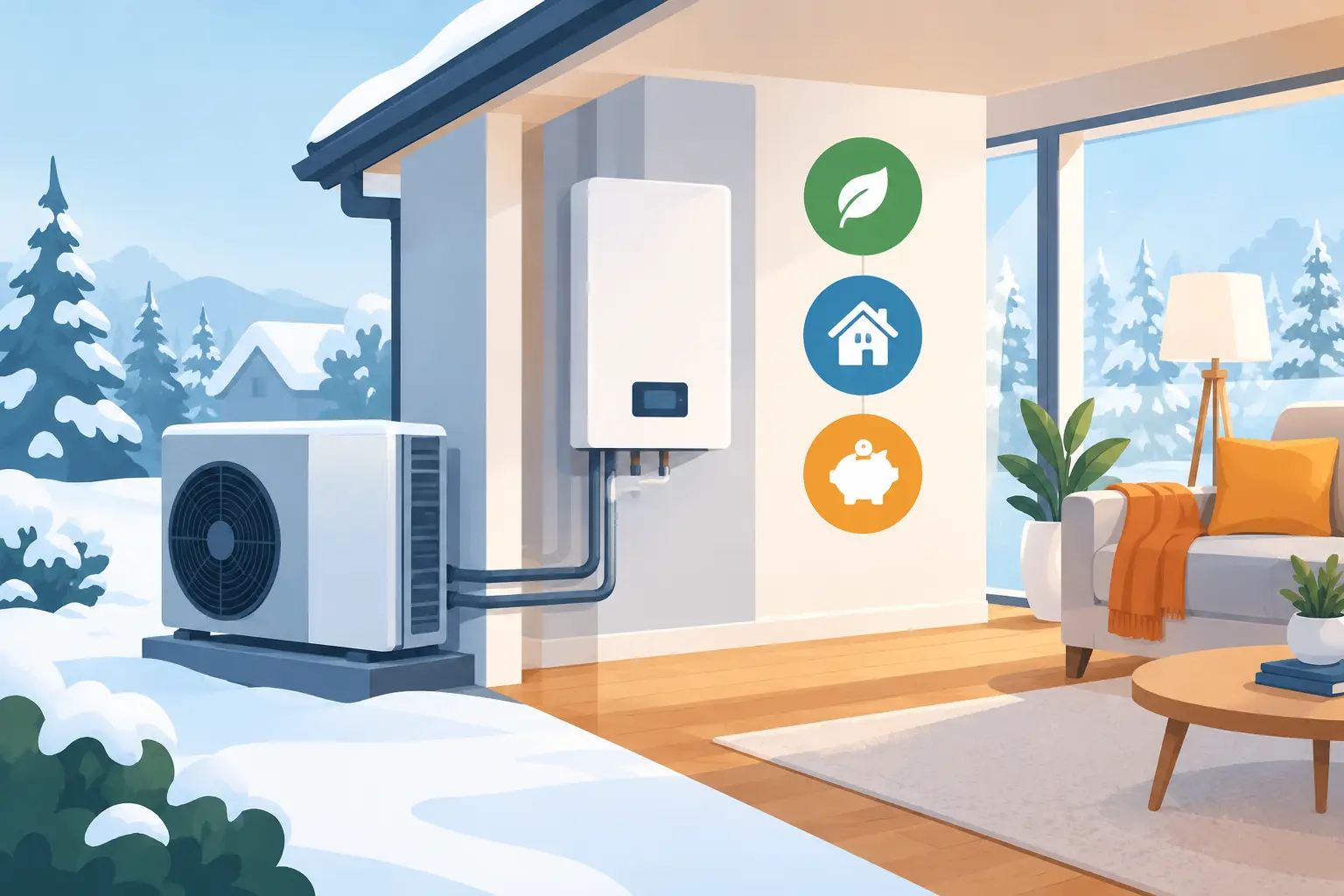
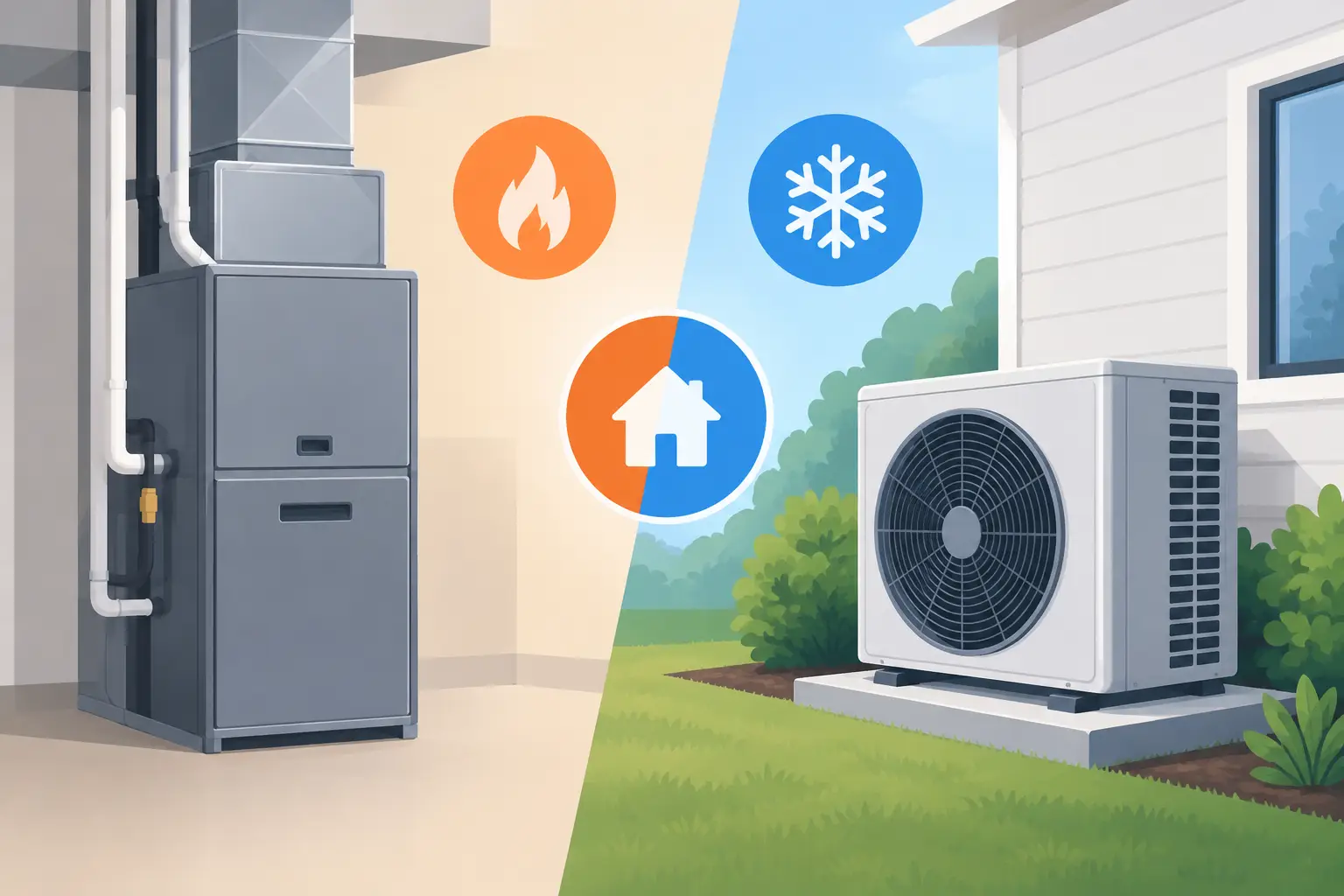
For homes considering a heat pump, sizing requires additional care. A heat pump’s output changes with outdoor temperature, and some systems use a furnace or electric backup heat during colder weather. A professional should evaluate whether a dual-fuel setup, all-electric heat pump, or standard furnace best fits the property and household priorities.
When Replacing a Furnace, Do Not Copy the Old Size
An existing furnace label can be useful information, but it should not dictate the replacement size. The old equipment may have been oversized from the day it was installed. It may also have been selected before new windows, insulation, air sealing, remodeling, or an addition changed the home’s heating needs.
If the old furnace has struggled, ask specific questions. Are some rooms consistently colder? Does the unit run constantly? Does it start and stop every few minutes? Are there comfort issues only during severe weather, or throughout the season? Those details help identify whether the problem involves capacity, ductwork, thermostat placement, airflow, maintenance, or the building envelope.
A complete installation assessment should also verify gas line sizing, venting requirements, electrical connections, condensate drainage for high-efficiency equipment, filter access, and safe combustion air. These details protect performance and safety after installation day.
What to Expect From a Professional Sizing Visit
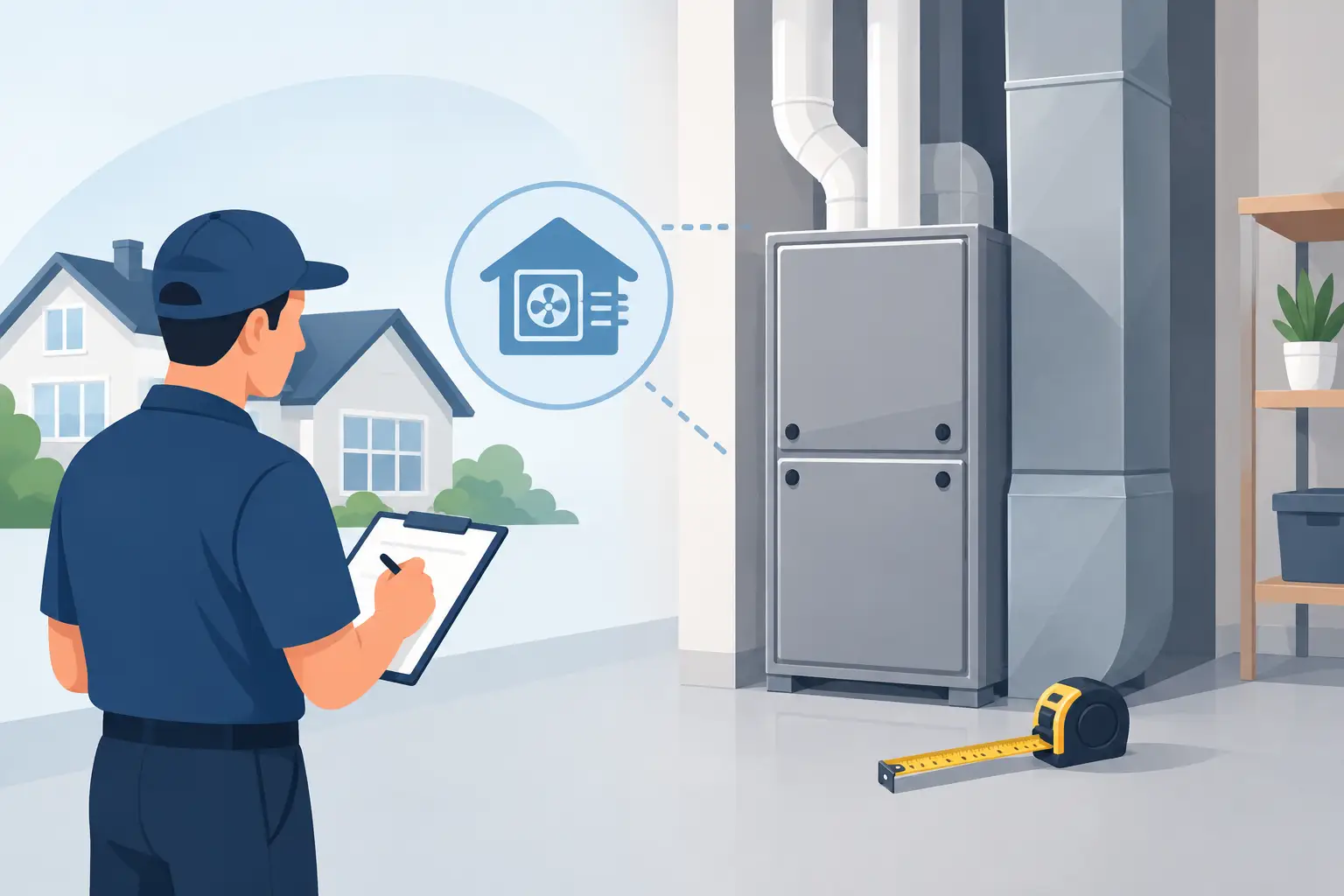
A reliable HVAC professional should inspect more than the mechanical room. Expect questions about your comfort concerns, utility costs, recent upgrades, and plans for the home. The contractor should measure or assess the home’s layout, insulation levels, windows, and duct system before recommending a capacity range.
The final proposal should clearly identify the equipment model, efficiency rating, output capacity, warranty information, and any duct or installation work needed. If a recommendation is based only on square footage or on matching the old furnace’s rating, ask for more detail before moving forward.
For homeowners and property managers in Washougal, Vancouver, and throughout Clark County, Creekside HVAC provides expert heating and cooling services built around the actual needs of the property. A careful evaluation helps prevent the frustration of paying for new equipment that never delivers consistent comfort.
The best furnace size is not a guess, a sales shortcut, or a number borrowed from a neighbor’s home. It is the result of looking closely at how your building loses heat and selecting equipment designed to meet that demand for years ahead.