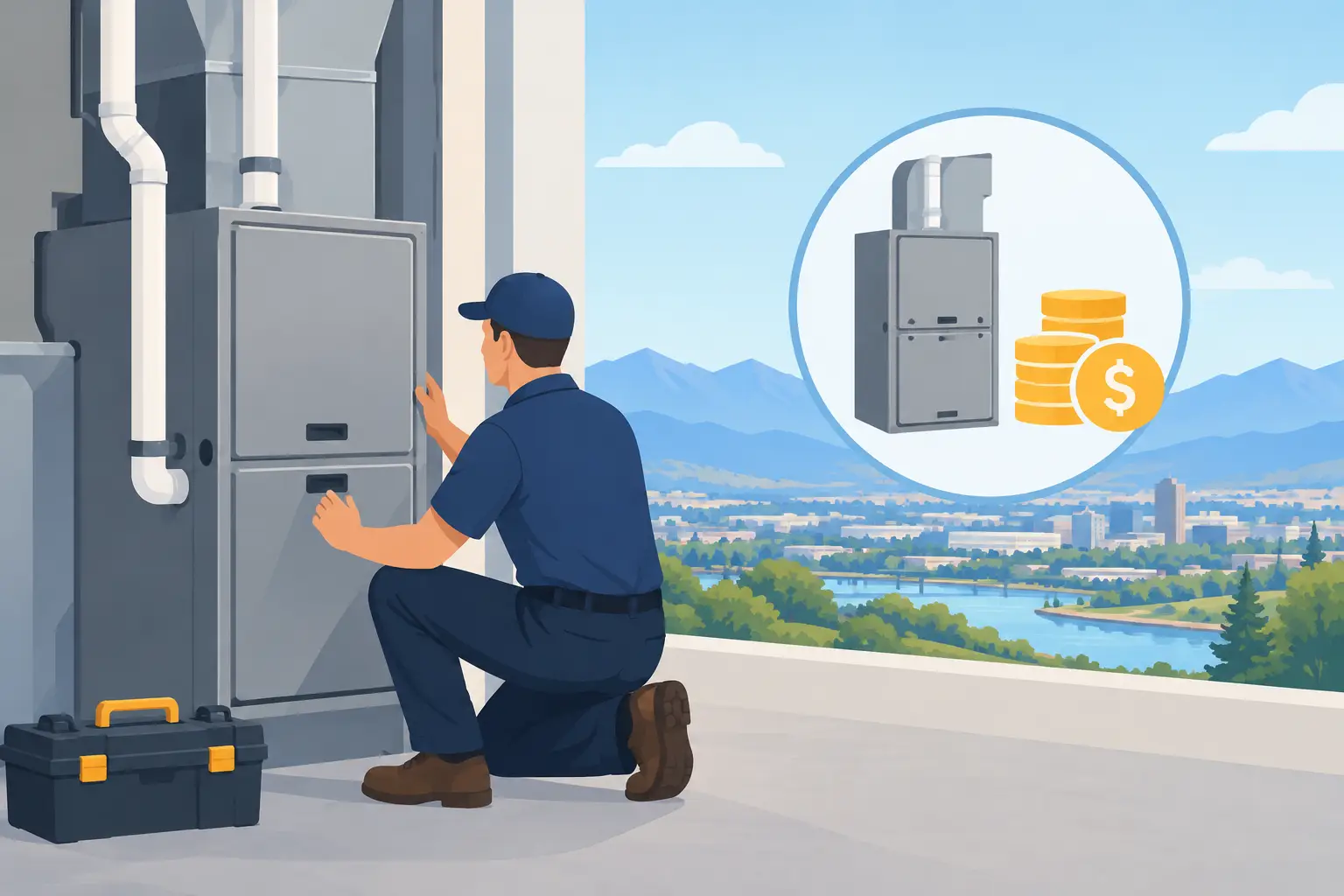
A furnace often fails at the worst possible time: during a cold, wet Clark County week when your home needs dependable heat. Looking at furnace replacement cost examples before that happens can make the decision less stressful. The useful number is not the price of a furnace cabinet alone. It is the installed cost of equipment that is properly sized, safely connected, permitted when required, and ready to heat your home efficiently.
For homes in Washougal, Vancouver, and surrounding Southwest Washington communities, furnace replacement pricing can vary significantly. Your existing fuel source, ductwork condition, venting setup, home layout, and the efficiency level you choose all affect the final quote.
What a Furnace Replacement Quote Should Include
A complete furnace replacement estimate should account for more than the furnace itself. It should include removal of the existing unit, installation labor, startup and testing, and the materials needed to make the new system operate correctly. Depending on the home, that may include a new thermostat, gas piping adjustments, electrical work, vent pipe, a filter cabinet, condensate drainage, or modifications to the supply and return plenums.
Permit requirements and code updates can also affect cost. A replacement that seems straightforward may need additional work if an older installation does not meet current safety or venting requirements. This is one reason a contractor should inspect the equipment and installation area before providing a firm price.
A low quote is not always a lower total cost. Ask whether it includes disposal, permits, startup, warranty registration support, and the equipment accessories required for a complete installation. A clear scope protects homeowners from unexpected add-ons after work begins.
Furnace Replacement Cost Examples
The following examples reflect common project types, not fixed prices. Equipment availability, home conditions, and the exact installation requirements will determine the final investment.
Example 1: Standard gas furnace replacement
A homeowner has an older 80% efficient gas furnace in an accessible garage or utility area. The duct connections are usable, the gas line is adequate, and the existing venting can be safely retained or updated with minor work. A replacement with a comparable single-stage furnace, basic thermostat, labor, and standard installation materials may commonly fall in the range of $5,500 to $8,500.
This is often the most straightforward replacement scenario. It does not mean every older furnace can be replaced at this price, particularly if the system has undersized return ducts, a failing evaporator coil above the furnace, or difficult access.
Example 2: High-efficiency furnace with new venting
A homeowner chooses a 95% to 97% efficient condensing gas furnace for better fuel efficiency and quieter performance. High-efficiency equipment typically uses PVC intake and exhaust venting and needs a properly installed condensate drain. If new vent routes, drainage, electrical changes, or a compatible thermostat are needed, a typical installed range may be $8,000 to $12,500.
The higher upfront price can make sense when a home uses substantial winter heat, when the old furnace is inefficient, or when the homeowner plans to remain in the house for years. However, the best choice depends on more than the efficiency rating. Proper sizing and installation quality have a major effect on comfort and operating costs.
Example 3: Furnace replacement with ductwork corrections
A furnace may be near the end of its life, but the real comfort issue can be airflow. For example, a home with hot and cold rooms, noisy return grilles, or restricted airflow may need duct repairs, a larger return, sealing work, or new transitions at the equipment. A furnace replacement that includes targeted duct improvements may range from $9,500 to $15,000 or more.
That added work is not cosmetic. A furnace cannot deliver its expected performance if it cannot move the right amount of air. In some cases, correcting the duct system helps prevent premature equipment wear and improves comfort room to room.
Example 4: Furnace and air conditioner replacement together
If your furnace and central air conditioner are both aging, replacing them together can be practical. The indoor coil, refrigerant connections, controls, and airflow setup can be matched as one system rather than worked around later. A combined furnace and air conditioner installation may commonly range from $13,000 to $22,000 or more, depending on efficiency, capacity, electrical needs, and duct modifications.
Replacing both systems is not automatically the right answer. If the air conditioner is newer and performing well, it may be reasonable to replace only the furnace. A qualified inspection can identify whether the existing components are compatible and worth keeping.
What Changes the Final Replacement Price?
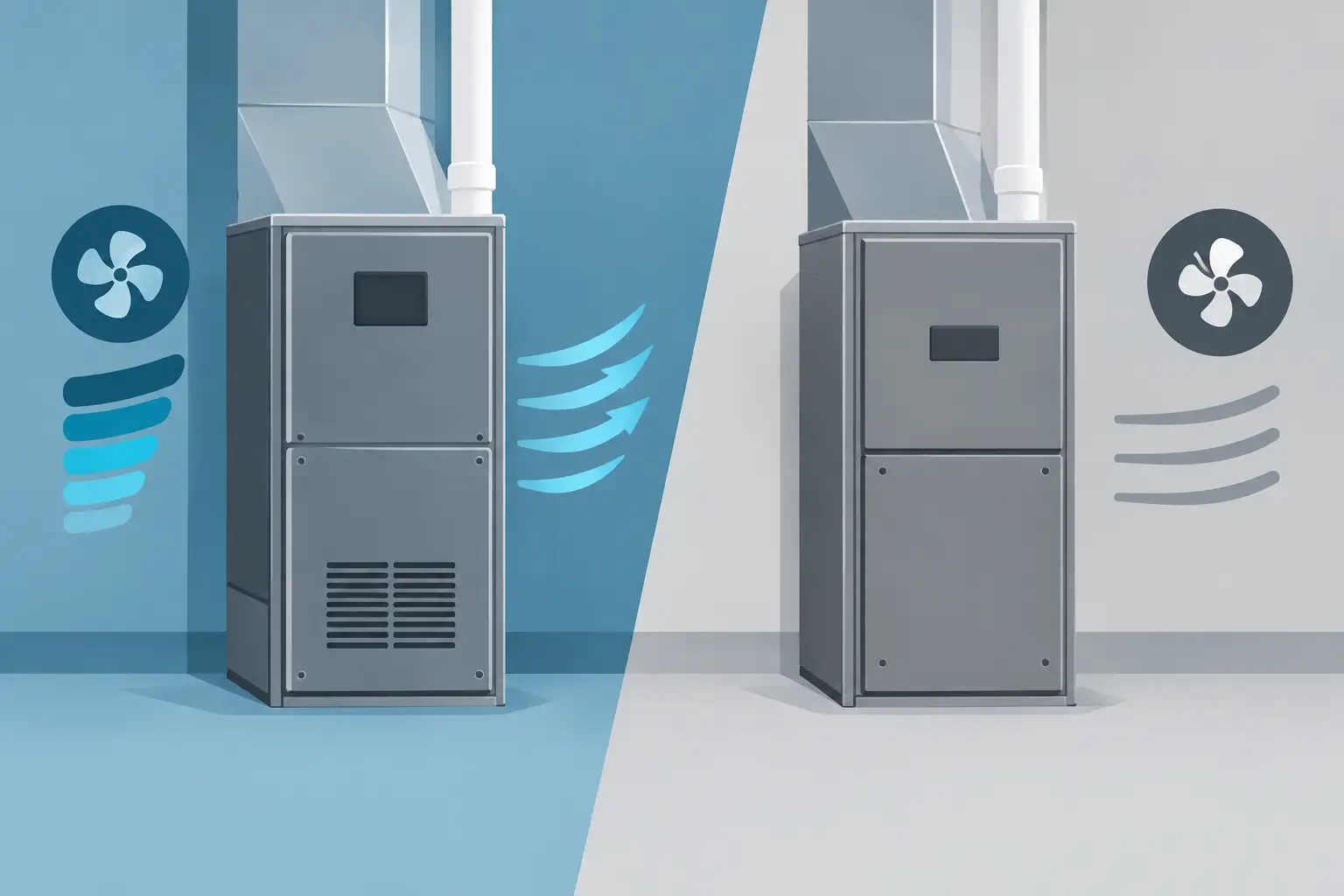
The furnace size is a major factor, but bigger is not necessarily better. A furnace that is oversized can cycle on and off too frequently, create uneven temperatures, and increase wear. A contractor should evaluate the home’s square footage, insulation, windows, duct system, and heating needs instead of selecting a capacity based only on the old furnace’s nameplate.
Efficiency is another cost driver. Standard-efficiency and high-efficiency furnaces use different venting approaches, and a high-efficiency model may require more installation work. The potential fuel savings can be worthwhile, but the payback depends on your gas use, the condition of the home, and how long you expect to own the property.
Access matters as well. Equipment located in a crawl space, attic, tight closet, or area with limited clearance takes more labor than a unit in an open garage. Existing conditions matter just as much. Corroded flues, aging gas lines, inadequate electrical connections, damaged ducts, and poor drainage can turn a simple replacement into a more involved project.
Brand, warranty coverage, blower technology, and control options also influence equipment cost. Variable-speed blowers and communicating controls can improve comfort and operation, but they may not be necessary for every home. The right system is the one that fits your comfort goals, budget, and existing HVAC setup.
Repair or Replace an Aging Furnace?
A repair may be the sensible choice when the furnace is relatively young, the problem is isolated, and the system has been maintained. A failed igniter, pressure switch, capacitor, or control component does not automatically mean the furnace needs replacement.
Replacement becomes more reasonable when repairs are frequent, the heat exchanger is compromised, parts are becoming difficult to source, or the unit is approaching or past its expected service life. Many furnaces last roughly 15 to 20 years, although maintenance, installation quality, and runtime can shorten or extend that range.
Consider the full picture. If a major repair is needed on a 17-year-old furnace and the system also has comfort issues or rising gas use, investing in a replacement may offer more predictable heating. If a 7-year-old furnace needs a modest repair, replacement may be unnecessary. An honest recommendation should explain both options and the trade-offs involved.
How to Compare Furnace Estimates
When comparing furnace replacement estimates, make sure each contractor is proposing the same level of work. One estimate may include a new filter cabinet, thermostat, permit, venting, and duct transitions while another lists only the furnace model. Those are not equivalent proposals, even if the equipment efficiency ratings look similar.
Ask for the furnace model, efficiency rating, warranty information, installation scope, permit handling, and any recommended repairs to ducts or electrical components. You should also know whether the estimate includes removal of the old equipment and final system testing. Clear answers make it easier to compare value rather than simply choosing the lowest number.
For a property manager or small business owner, downtime deserves attention too. Confirm the installation schedule, access requirements, and whether the contractor can coordinate work around tenants or business operations. Reliable heating service is especially valuable when a failure affects more than one household.
A Local Perspective for Southwest Washington Homes
Clark County homes experience damp winters, changing shoulder-season temperatures, and occasional cold snaps. That makes dependable heat and balanced airflow more valuable than a paper efficiency rating alone. In some homes, a furnace remains the best fit. In others, it is worth comparing a high-efficiency furnace with heat-pump options, particularly when cooling needs and electric utility costs are part of the conversation.
Before approving a replacement, request an on-site evaluation that addresses your home rather than a generic price over the phone. Creekside HVAC can help homeowners and local property owners understand the condition of their current system, the work a replacement will require, and which heating solution fits the property. A clear estimate gives you time to choose dependable comfort before the next cold morning forces the decision.