
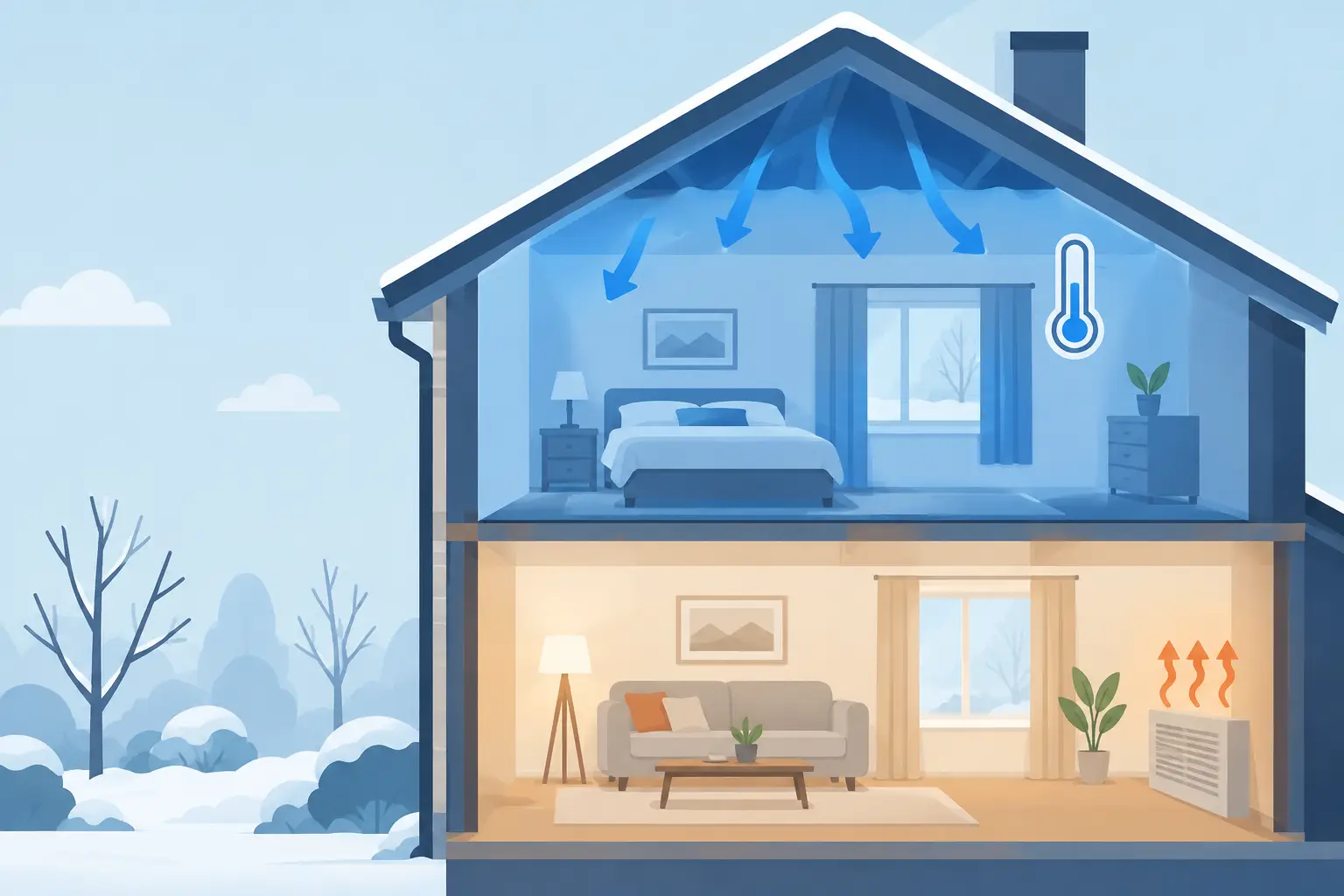
A thermostat may show a comfortable 70 degrees downstairs while the bedrooms above feel noticeably colder. For Clark County homeowners, the question of what causes cold upstairs rooms often comes up during damp, chilly Pacific Northwest weather, when an upstairs comfort problem becomes harder to ignore. The answer is not always a failing furnace or heat pump. Heat loss at the attic, airflow restrictions, leaky ducts, and system sizing can all leave the second floor behind.
A proper diagnosis looks at the house and the HVAC system together. Turning up the thermostat may temporarily warm the bedrooms, but it can also overheat the main floor, increase energy use, and put extra strain on heating equipment.
What Causes Cold Upstairs Rooms During Winter?
Warm air naturally rises, but that does not guarantee an upstairs room will stay warm. Heat can escape through the roof and exterior walls faster than your heating system can replace it. Meanwhile, the return-air path, supply ducts, and room layout may prevent conditioned air from circulating where it is needed.
Insufficient Attic Insulation
The attic is often the first place to investigate. In winter, a poorly insulated attic allows heat to move out through the ceiling below it. Upper-level rooms sit directly under that heat loss, so they can feel colder than rooms on the main floor even when the furnace is running normally.
Insulation can settle, shift, become compressed, or leave gaps around recessed lights, attic hatches, plumbing penetrations, and wiring. Older homes may simply have less insulation than current comfort and efficiency expectations call for. In Washougal, Vancouver, and throughout Clark County, damp conditions can also reveal insulation or moisture issues that were not obvious during milder weather.
Adding insulation can make a meaningful difference, but air sealing should be part of the conversation. Insulation slows heat transfer. It does not stop outside air from entering through gaps in the building envelope.
Air Leaks Around Windows, Doors, and Exterior Walls
Cold drafts are a common reason one bedroom feels much colder than the rest of the home. Air leaks around window frames, exterior doors, attic access points, electrical outlets, baseboards, and plumbing openings can pull cold outside air into upper rooms.
A room with a large north-facing window, an older window assembly, or a cantilevered floor section may be especially difficult to heat. Closing the door to that room can make the problem worse if the room has limited return-air circulation. The supply vent may be delivering warm air, but that air has nowhere to go once the door is shut.
Weatherstripping and caulking can help with small gaps. Larger comfort problems may call for a more complete home-performance assessment, especially if the room also shows condensation, musty odors, or signs of moisture damage.
Ductwork Leaks, Damage, or Poor Routing
Many upstairs rooms are served by long duct runs that travel through attics, crawlspaces, wall cavities, or other unconditioned areas. If those ducts are poorly insulated, disconnected, crushed, undersized, or leaking at their joints, heated air can be lost before it reaches the register.
Duct leakage is not always visible from inside the home. One clue is weak airflow from an upstairs vent while downstairs vents seem strong. Another is a room that improves slightly when the system first starts but never reaches the thermostat setting during a longer heating cycle.
Ductwork needs to be evaluated carefully. Closing several downstairs vents in an effort to force more heat upstairs can create excess static pressure in the system. That may reduce overall airflow, increase noise, and contribute to equipment problems. A technician can determine whether duct repair, sealing, insulation, or airflow balancing is the better solution.
A Blocked or Inadequate Return-Air Path
Heating systems need both supply air and return air. Supply registers deliver warmed air to a room. Return grilles bring air back to the furnace or air handler so it can be reheated and circulated again.
An upstairs bedroom may have a supply register but no dedicated return grille. That can work if there is enough space under the door or another pathway for air to leave the room. It becomes a problem when carpeting, tight door seals, furniture placement, or closed doors restrict that pathway.
If a room becomes cold whenever the door is closed, the return-air path deserves attention. Depending on the home, the solution may involve adjusting door undercuts, improving transfer airflow, adding a return, or making another design change recommended by an HVAC professional. The right approach depends on the equipment, duct layout, and room pressure readings.
Thermostat Location and Zoning Limitations
Most single-zone homes have one thermostat, often located on the main floor. If that thermostat reaches its set temperature quickly, the heating cycle ends even though the upstairs has not warmed enough. The system is responding correctly to the thermostat, but the thermostat is not measuring conditions in the cold room.
This is especially common in homes with open main-floor living areas, high ceilings, or fireplaces near the thermostat. The downstairs can satisfy the thermostat before heat has enough time to reach distant upstairs rooms.
A programmable thermostat with remote sensors may help in some homes by prioritizing temperatures in occupied areas at certain times of day. Zoning can offer more control, but it is not automatically the right answer. Zoning requires compatible equipment, correctly designed ducts, and properly installed zone controls. A professional assessment can help determine whether simpler airflow or insulation improvements should come first.
Furnace or Heat Pump Performance Problems
Sometimes the upstairs is cold because the entire heating system is not producing or moving enough heat. A dirty air filter, failing blower motor, incorrect blower settings, restricted indoor coil, malfunctioning heat pump component, or furnace repair issue can reduce airflow and heating capacity throughout the house.
These issues often show up upstairs first because the second floor may be at the end of the duct system. You may also notice longer run times, uneven temperatures on both floors, unusual noises, higher utility bills, or a system that cannot maintain the set temperature on colder days.
Heat pumps deserve particular attention in Southwest Washington. They are efficient heating systems, but they need correct refrigerant charge, airflow, controls, and supplemental heat operation to perform as intended. If a heat pump is blowing cool air, cycling frequently, or struggling to heat the home, prompt heat-pump service can prevent a smaller issue from becoming a no-heat call.
How to Check a Cold Upstairs Room Before Calling for Service
Start with the simple checks that do not interfere with system operation. Make sure the supply register is fully open and not blocked by a bed, dresser, curtain, or rug. Check that the thermostat is set to heat and that the air filter is clean. A heavily loaded filter can limit airflow across the entire home.
Then compare airflow at the upstairs register to a similar register downstairs. Look for obvious gaps around windows and exterior doors, and pay attention to whether the room changes when the door is open versus closed. These observations can give an HVAC technician useful direction during a service visit.
Avoid repeatedly raising and lowering the thermostat or shutting off multiple vents. Those actions rarely fix the underlying issue and can make diagnosis harder. If you smell burning, notice water near the equipment, hear loud banging or scraping, or have no heat in part of the home, schedule professional service rather than continuing to troubleshoot.
When a Professional HVAC Evaluation Makes Sense
A cold upstairs room is worth a closer look when it is a recurring problem, when the temperature difference is more than a few degrees, or when your system runs for long periods without delivering consistent comfort. A technician can inspect heating output, blower performance, filter condition, static pressure, duct connections, and airflow at individual registers.
The evaluation may show that the equipment itself needs repair, but it may also point to duct modifications, return-air improvements, attic insulation, air sealing, or thermostat adjustments. That distinction matters. Replacing a furnace or heat pump will not fully solve a comfort issue caused by a disconnected attic duct or major heat loss through the ceiling.
For homeowners and property managers in Washougal, Vancouver, and Clark County, Creekside HVAC provides expert heating and cooling services to help identify the source of uneven temperatures and recommend practical repairs. A comfortable upstairs should not require overheating the rest of the house. The next cold morning is a good time to notice the pattern, document what the room is doing, and have the right local professional trace the problem to its source.